

At Campos Law Firm, we closely monitor developments in U.S. immigration policy to protect our clients’ rights and future. On October 23, 2026, the full U.S. Court of Appeals for the Fifth Circuit ruled 10-7 that the Fifth Amendment does not, on its own, require bond hearings for immigrants detained while their removal cases proceed.
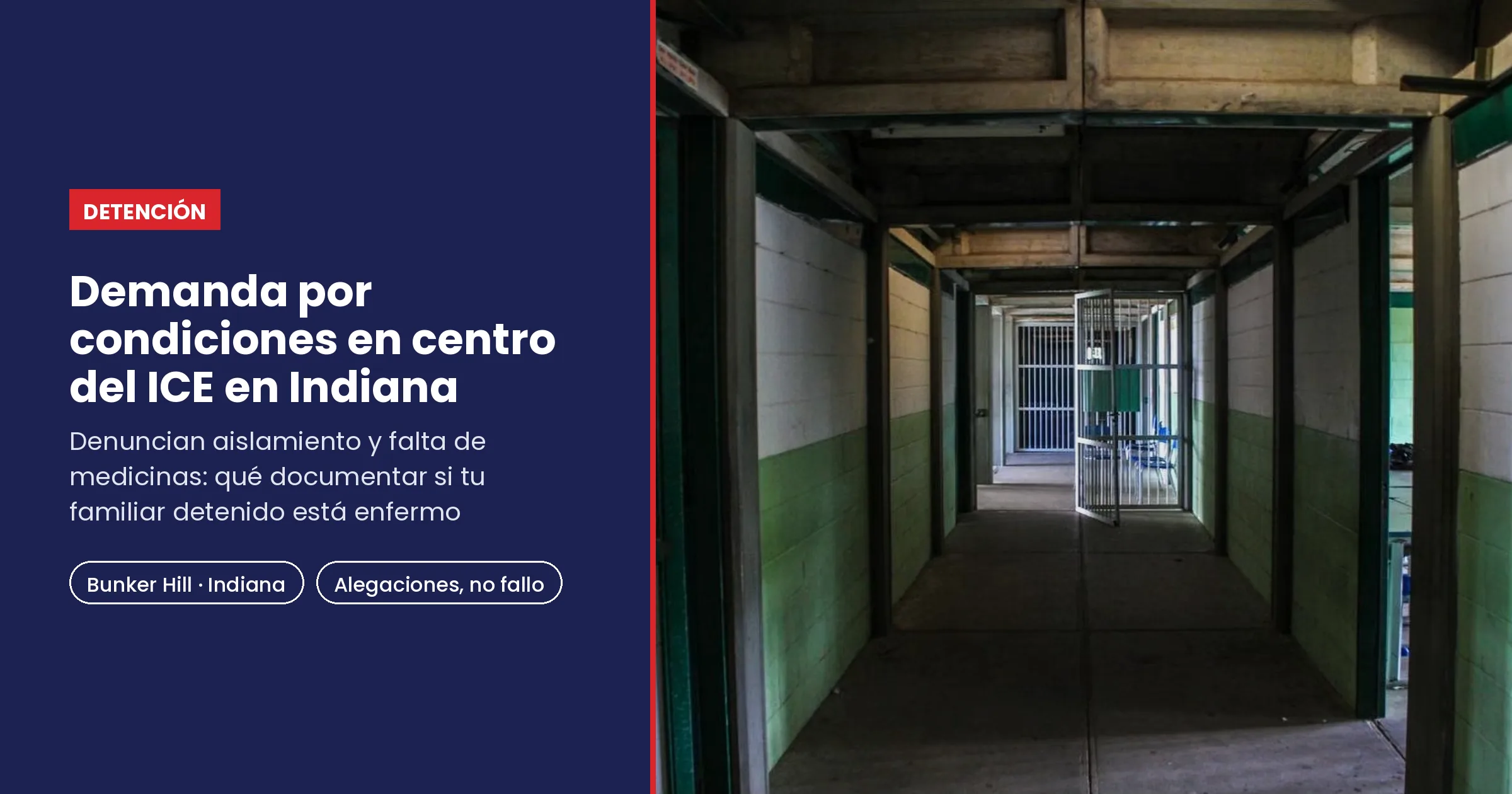
If a family member is being held by Immigration and Customs Enforcement (ICE) in Texas, Louisiana, or Mississippi, this affects you. Below, we explain what is known, what is not, and what you can do.
What did the Fifth Circuit decide?
The case, Sosnava Rodriguez v. Vergara, consolidates the habeas corpus petitions of two Mexican citizens and one Honduran held in Texas for between three weeks and three months with no chance to request bond. In July 2026, a three-judge panel had ruled 2-1 that ICE could not hold them for more than 90 days without a hearing on dangerousness and flight risk.
The full court, based in New Orleans, reversed that decision. Judge Cory T. Wilson wrote for the majority that “the Constitution does not entitle them to a bond hearing” and that due process does not require “additional proceedings beyond what Congress has provided.” The majority added that detainees can regain their liberty “at any moment by agreeing to leave the country,” as reported by Reuters.
Dissenting, Judge Dana Douglas wrote that “unchecked, executive authority to arrest and detain, indefinitely, echoes fearfully from history.” Department of Homeland Security (DHS) General Counsel James Percival hailed the ruling as a “big win,” while Ellie Norton of the National Immigration Project warned it “opens the door” to more people being locked up for no reason.
Can a detained immigrant request bond?
It depends on which section of the law the person is detained under, and where. Since 2025, the government has argued that anyone who entered without inspection, even after years in the U.S., is an “applicant for admission” subject to mandatory detention under section 235(b)(2)(A) of the Immigration and Nationality Act (INA), which provides no bond. Previously, those people were held under section 236(a), which lets an immigration judge set bond if there is no danger or flight risk.
The Board of Immigration Appeals adopted that reading in Matter of Yajure Hurtado, and the Fifth Circuit endorsed it in February 2026 in Buenrostro-Mendez v. Bondi. Most other circuits have concluded the opposite: people arrested in the interior remain under 236(a) and may seek bond. That is why a detainee in Colorado or Florida may get a bond hearing today while someone with the same history is denied one in Texas.
The October 23 ruling closes, within the Fifth Circuit, the second path: the argument that even if the statute is silent, the Constitution requires a hearing once detention drags on. In practice, a person held under 235(b) in that circuit now has no right to bond under the statute or the Fifth Amendment, unless the Supreme Court says otherwise.
What remains open? The Supreme Court and habeas corpus
On October 1, 2026, the Supreme Court agreed to review the statutory question in the case of Ricardo Aparecido Barbosa da Cunha, a Brazilian citizen who applied for asylum in 2016 and was arrested in September 2025 with no criminal record, according to AP. The question is whether the law, not the Constitution, requires bond hearings for people living in the country. If the Court holds that 236(a) applies, the Fifth Circuit’s ruling would lose much of its practical effect. The case is expected to be heard “in the coming months.”
In the meantime, several avenues remain:
- Habeas corpus: the ruling does not eliminate the right to go before a federal judge; it holds only that three weeks to three months of detention, by itself, does not violate the Constitution. Each petition turns on its facts and its court.
- Other forms of relief: asylum, cancellation of removal, and humanitarian parole do not depend on this decision.
According to TRAC, 65,765 people were in ICE custody as of July 11, 2026. Attorney Alejandra Campos, founder of Campos Law Firm, stresses that the ruling draws a line between constitutional rights and rights created by statute, and that each detainee’s options depend on the type of detention, the circuit, and the facts.
What can you do if a family member is detained in Texas?
- Locate them and write down their A-Number: use ICE’s Online Detainee Locator (locator.ice.gov) and record the detention center and the Alien Number.
- Do not sign, or let them sign, voluntary departure or a stipulated removal order without counsel: agreeing to “leave the country” closes the door to many forms of relief.
- Ask an attorney to determine which section applies: 235(b) or 236(a) changes the entire strategy.
- Move quickly: detained cases move much faster than non-detained ones.
Our Irving, Texas office in the Dallas area sits within the Fifth Circuit and handles detention cases in Texas, Louisiana, and Mississippi.
Protect Your Rights with Campos Law Firm
A court saying the Constitution does not require a bond hearing does not mean your family member has no options; it means those options must be found with more precision in the statute, in habeas corpus, and in the underlying forms of relief. Our immigration attorneys review the basis for the detention, the time in custody, and the deadlines to preserve every remedy.
Do not leave your immigration status to chance. Call us today at +1 (844) 922-6767 to schedule a free, confidential consultation in English or Spanish. Campos Law Firm: Legal Solutions in All Areas of Law.
With information from Reuters, the Associated Press, the U.S. Court of Appeals for the Fifth Circuit, and TRAC.