
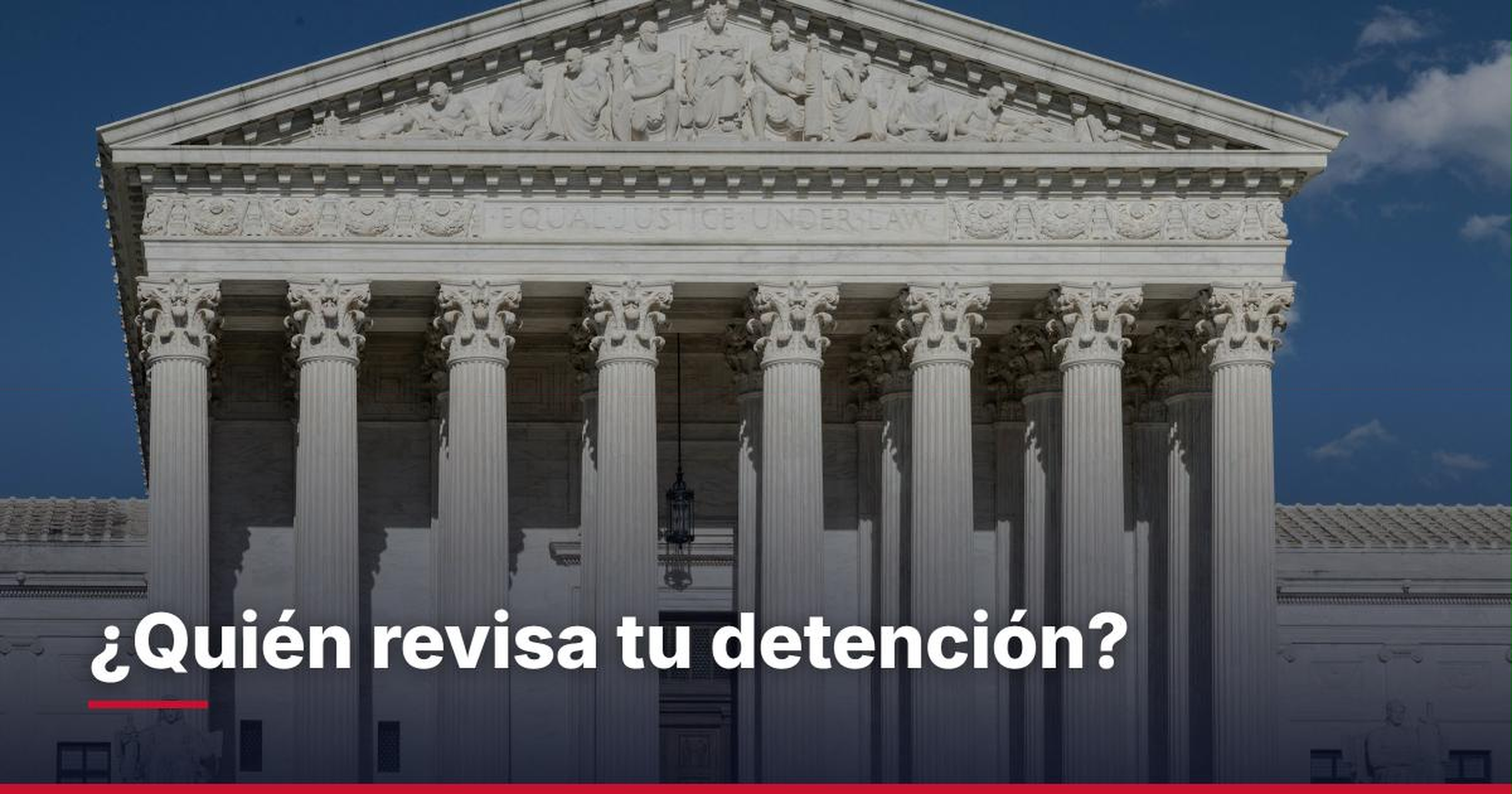
At Campos Law Firm, we closely monitor developments in U.S. immigration policy to protect our clients’ rights and future. On September 22, 2026, it emerged that the Justice Department had asked the Supreme Court to review a foundational question: whether a person detained while their deportation case proceeds may go to a federal district court to challenge that detention, or must stay within the immigration court system.
Here is what was asked, where the conflict comes from, and what changes today for a family with a detained relative.
What did the government ask the Supreme Court?
The question the Justice Department presents is blunt: must noncitizens challenge the grounds for their removal solely through the petition-for-review process Congress prescribed in Title 8 of the U.S. Code, or may those detained while proceedings advance also file a habeas corpus petition?
The provision at issue is 8 U.S.C. § 1252, which strips district courts of jurisdiction over claims “arising from or relating to the implementation or operation of an order of removal.” The government argues that reading it as the appeals court did would open the door to challenging immigration detention outside the immigration court system.
The filter is worth remembering: four justices must vote to take a case, and out of more than 10,000 petitions a year the Court typically hears 65 to 70.
The two cases behind the conflict
- Badar Khan Suri. An Indian citizen and Georgetown University scholar on a J-1 exchange visa, he was detained outside his home in March 2025 and released on bond in May 2025, after 58 days in Immigration and Customs Enforcement (ICE) detention, by federal Judge Patricia Tolliver Giles.
- The Fourth Circuit’s decision. On July 23, 2026, in a 2-1 ruling, the appeals court held he should remain out of detention while his case proceeds. Judge DeAndrea Benjamin put the point plainly: if someone is challenging their detention pending removal, waiting for the removal proceedings does them no good.
- Mahmoud Khalil. The Columbia University graduate’s case went the other way: in January 2026 the Third Circuit ruled against him. That split between circuits is precisely the strongest argument for the Supreme Court to step in.
What is habeas corpus, and why does it matter so much here?
Habeas corpus is the petition through which a detained person asks a federal judge to review whether the detention is lawful. It does not decide whether you can be deported. It decides whether you can be held while that is litigated.
That distinction is the heart of the matter. Immigration court sits within the Justice Department, not the judiciary, and its authority over custody is limited: there are mandatory detention categories in which an immigration judge cannot set bond at all. When that door is closed, habeas corpus in federal court has often been the only way to contest a detention that is prolonged or unsupported.
If the Supreme Court narrowed that route, the practical effect would not be on who wins or loses a deportation case, but on how long a person can be held before an independent judge reviews that detention. This is a due process question, not a question of immigration merits.
What changes for you today?
For now, nothing. A petition is not a decision: the Supreme Court has not accepted the case, and if it does, a ruling would come months later. In the meantime, the law in each state remains what its own court of appeals has held.
What is worth doing:
- Document the exact arrest date and every transfer: in a prolonged-detention argument, the calendar is the argument.
- Ask under which provision your relative is being held: that determines whether bond can be sought before an immigration judge or whether federal court is the path.
- Do not wait for the next immigration hearing: habeas deadlines run separately from the immigration court calendar.
- Be wary of absolute headlines: neither “habeas corpus is gone” nor “nothing changes.” Today the picture depends on the circuit where the case sits.
Protect Your Immigration Status with Campos Law Firm
When someone has been detained for months, the difference comes down to knowing which door to knock on, and in what order. Our team identifies the legal basis for the detention, evaluates whether a due process argument based on its length exists, and prepares both the bond request and the federal route when appropriate. We do not make unrealistic promises. We provide serious legal representation backed by preparation and integrity.
Do not leave your immigration status to chance. Call us today at +1 (844) 922-6767 to schedule a free, confidential consultation in English or Spanish. Campos Law Firm: Legal Solutions in All Areas of Law.


 English
  Spanish