
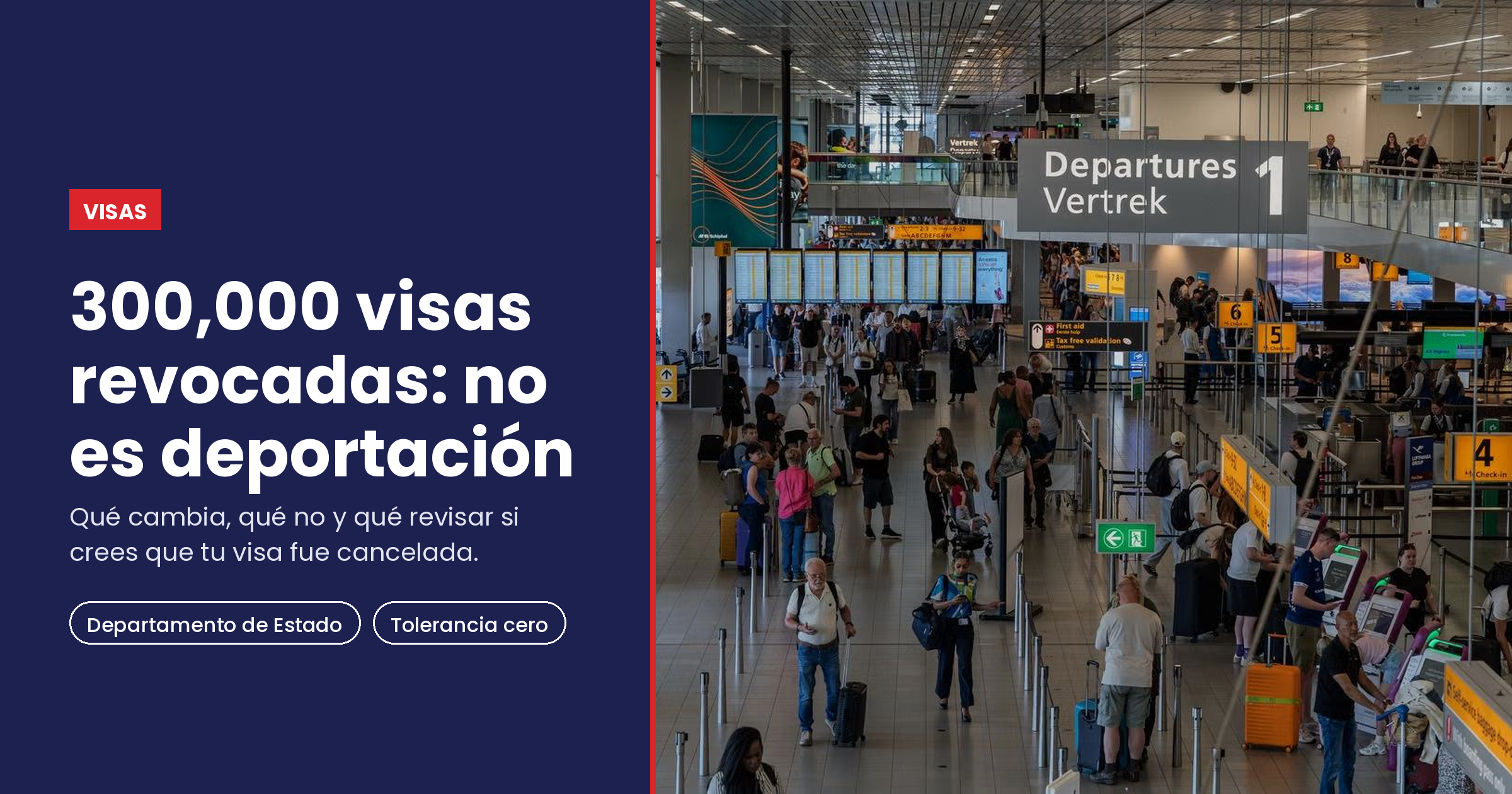
More than 300,000 visas revoked since January 2025: that is the figure the State Department reported on October 20, 2026, nearly double the 175,000 it announced in August. At Campos Law Firm, we closely monitor developments in U.S. immigration policy to protect our clients’ rights and future.
The headline is alarming. Below, we explain what is known, what is not, and what you can do.
What did the State Department announce on October 20?
According to Reuters, State Department spokesperson Tommy Pigott posted the figure on X and said the administration “has revoked more visas at a faster pace than any administration in history.” He added that the government has “zero tolerance for foreigners here on visas who break the law, commit fraud, or undermine our national security.”
The pace is accelerating: in January 2026 the department cited more than 100,000 revocations; on August 10, more than 175,000; and in late September, according to reports, more than 250,000. In August we analyzed the earlier figure in our article on the 175,000 visas revoked under the Trump administration, and what we explained then still applies.
What the number does not say matters just as much. The State Department has not released a breakdown by nationality or visa type, and the number of visas revoked is not the number of people deported. Those are two different processes, run by two different agencies.
Why are so many visas being revoked?
Based on the partial data the department has released, as compiled by Newsweek, most cases are attributed to criminal conduct or public-safety concerns: roughly 25% for assault, 22% for driving under the influence, 7% for theft, and another 7% for drug offenses. The department also reports more than 4,000 visas canceled over so-called “birth tourism” and more than 23,000 revocations generated by its new Continuous Vetting Center, which re-screens people who already hold visas.
Not every revocation involves a crime, however. Reuters notes that the administration has expanded social media screening of visa applicants and holders, and civil rights organizations have condemned cancellations tied to political views, including comments about the assassination of commentator Charlie Kirk and participation in pro-Palestinian protests. Those groups allege due process and free speech violations, as well as a risk of racial profiling.
Attorney Alejandra Campos summed it up on the Campos Law Firm Instagram:
Visa, status, revocation, NTA, and deportation: what is the difference?
This is the distinction that causes the most confusion, and the one you need clear before making any decision:
- Visa: the entry permit issued by the State Department through a consulate. It lets you present yourself at a port of entry and request admission; it does not define how long you may stay.
- Status (I-94): your legal condition inside the United States. U.S. Customs and Border Protection (CBP) sets it when it admits you, and it has its own expiration date. Your visa can be expired while your status is valid, or the other way around.
- Visa revocation: the State Department may cancel a visa at its discretion (section 221(i) of the Immigration and Nationality Act). If you are abroad, you cannot use it to return. If you are inside the country, the law treats someone who remains after a revocation as deportable (INA 237(a)(1)(B)), but that is a ground the Department of Homeland Security (DHS) may or may not act on.
- Notice to Appear (NTA): the document DHS uses to open removal proceedings before the Immigration Court. Receiving one does not mean you have been deported; it means a process begins in which you can defend yourself.
- Removal order: in most cases, an immigration judge issues it at the end of that process. Faster tracks exist (expedited removal, in absentia orders), but none is triggered automatically by a visa revocation.
In short, a revoked visa can open the door to proceedings, but it is neither the proceedings nor their outcome. Between one and the other there are hearings, deadlines, and available defenses.
What can you do if you think your visa was revoked?
- Check your notices: the State Department typically emails the address you gave on your application. Keep every message and do not ignore it.
- Locate your I-94 and its expiration date: download it from the CBP website. Your status, not your visa, determines whether you are lawfully in the country.
- Do not travel on impulse: if you leave the U.S. with a revoked visa, you cannot use it to come back. And if you accrued unlawful presence, leaving can trigger the 3- or 10-year reentry bars.
- Do not sign anything without advice: if ICE or CBP contacts you, you have the right to remain silent and to speak with an attorney before signing any document.
- Gather your file: passport, visa, I-94, receipts for any pending USCIS applications, and any police record.
- Get advice before a notice arrives: our immigration attorneys can check whether proceedings have been opened and what options you have.
Protect Your Immigration Status with Campos Law Firm
The 300,000 figure will keep growing, and so will the uncertainty. But every case turns on specific details: your visa type, your I-94, your record, whether you have a pending application, and whether DHS has decided to act. As Attorney Alejandra Campos reminds us, avoid desperate decisions and seek legal advice before you act.
Do not leave your immigration status to chance. Call us today at +1 (844) 922-6767 to schedule a free, confidential consultation in English or Spanish. Campos Law Firm: Legal Solutions in All Areas of Law.