
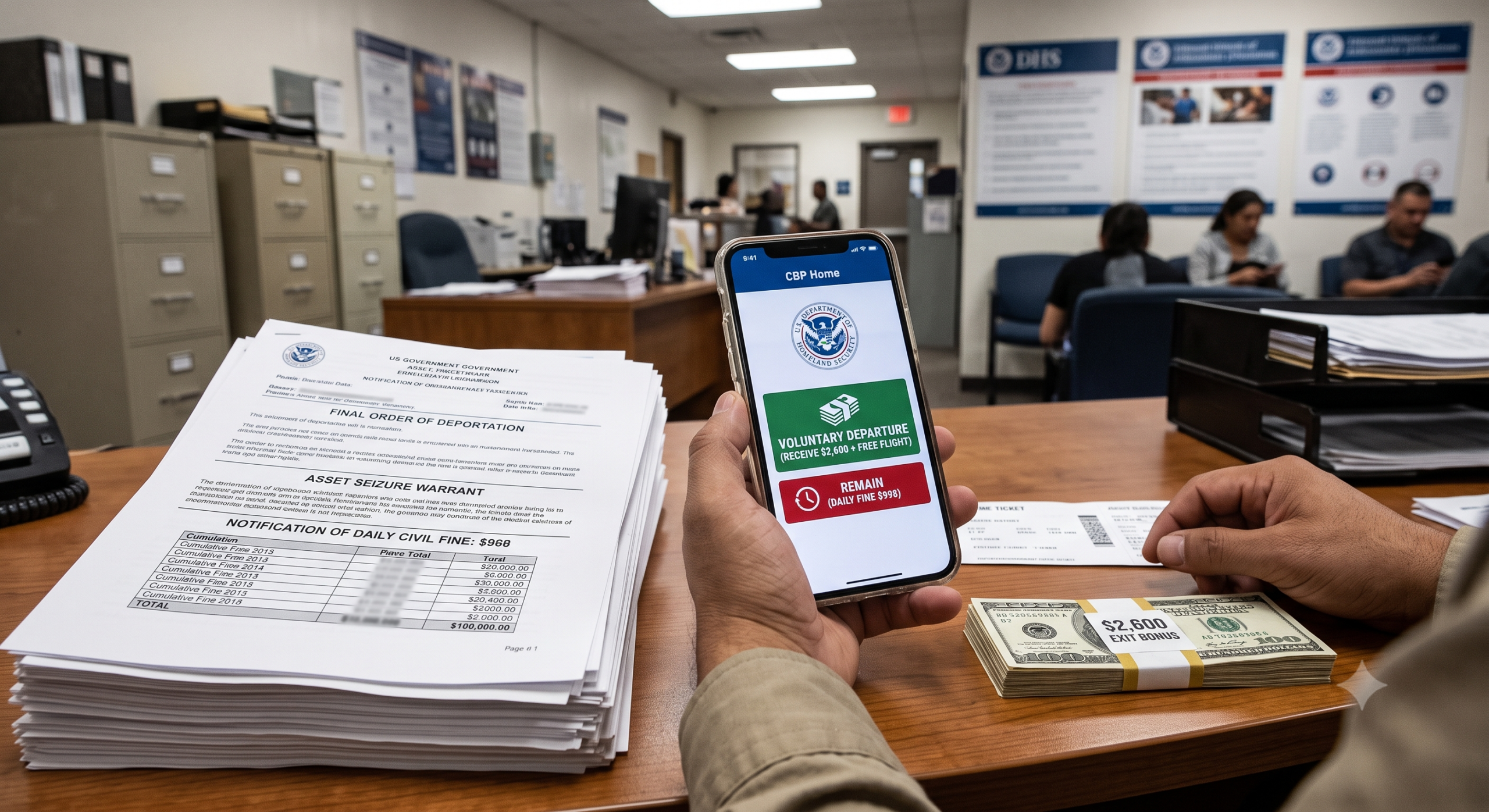
The Department of Homeland Security (DHS) has launched an unprecedented offensive to pressure immigrants with deportation orders to leave the United States on their own. Under a new policy, the government has issued over $84 billion in civil fines to individuals who have refused to leave after receiving a final order from a judge.
Here we explain simply what these measures consist of and what options the government is providing through the CBP Home app.
What do the $998 fines consist of?
If a person has a final deportation order and chooses to stay in the country, the government now charges them a fine of $998 for each day they remain in U.S. territory. Since these measures were strengthened, over 103,000 fines have been issued.
The most concerning thing for many families is that, since June 2025, the process became “express”:
- It is no longer necessary to give 30 days’ advance notice before imposing the fine.
- Fine notifications can now arrive simply by ordinary mail.
- If the person does not pay, the government has warned that it could seize their goods or assets to collect the money before they are deported.
The “CBP Home” App: A benefit or a trap?
The government is intensely promoting the CBP Home mobile app as an escape route for those who do not want to face arrests or multi-million dollar debts. According to official announcements, those who use the app to schedule their own departure from the country (what they call “self-deportation”) receive the following benefits:
- Total forgiveness of accrued fines for not leaving earlier.
- A free flight back to their country of origin.
- A $2,600 cash bonus upon departure.
DHS Deputy Secretary Lauren Bis was very clear about this on July 23: “Illegal aliens have a choice: they can use the CBP Home app and receive a free flight home and $2,600, or be fined, arrested, and deported.”
The consequences of being arrested
For those who decide not to use the app and are detained by ICE agents, the outlook is much more difficult. The government warns that those who are arrested:
- Will be deported immediately and will never be able to return to the United States legally.
- Will not have an opportunity to put their affairs in order before being detained.
- Could face jail time under current federal laws.
Is there any hope for the future?
Despite the severity of these measures, DHS has mentioned that immigrants without criminal records who decide to leave voluntarily could have an advantage: they are permitted to keep the money they earned working in the U.S. and, most importantly, could maintain the possibility of attempting to return legally in the future.
As of May 2026, official figures indicate that approximately 2.2 million people have already opted for “self-deportation” to avoid fines and the permanent penalty of never returning.

 EN
EN  ES
ES  ZH
ZH  FR
FR