
The Venezuelan TPS Supreme Court fight is back: on November 18, 2026, the government filed an emergency request to keep on hold the ruling that could open the door to restoring those protections. At Campos Law Firm, we closely monitor developments in U.S. immigration policy to protect our clients’ rights and future. First things first: a request is not a ruling. The Supreme Court has not decided anything, and TPS has not been restored.
Hours later, the Ninth Circuit also extended its own pause, which changes what was expected for Friday, November 20. Here is what we know, what we do not, and what you can do.
What Did the Government Ask in the Venezuelan TPS Supreme Court Filing?
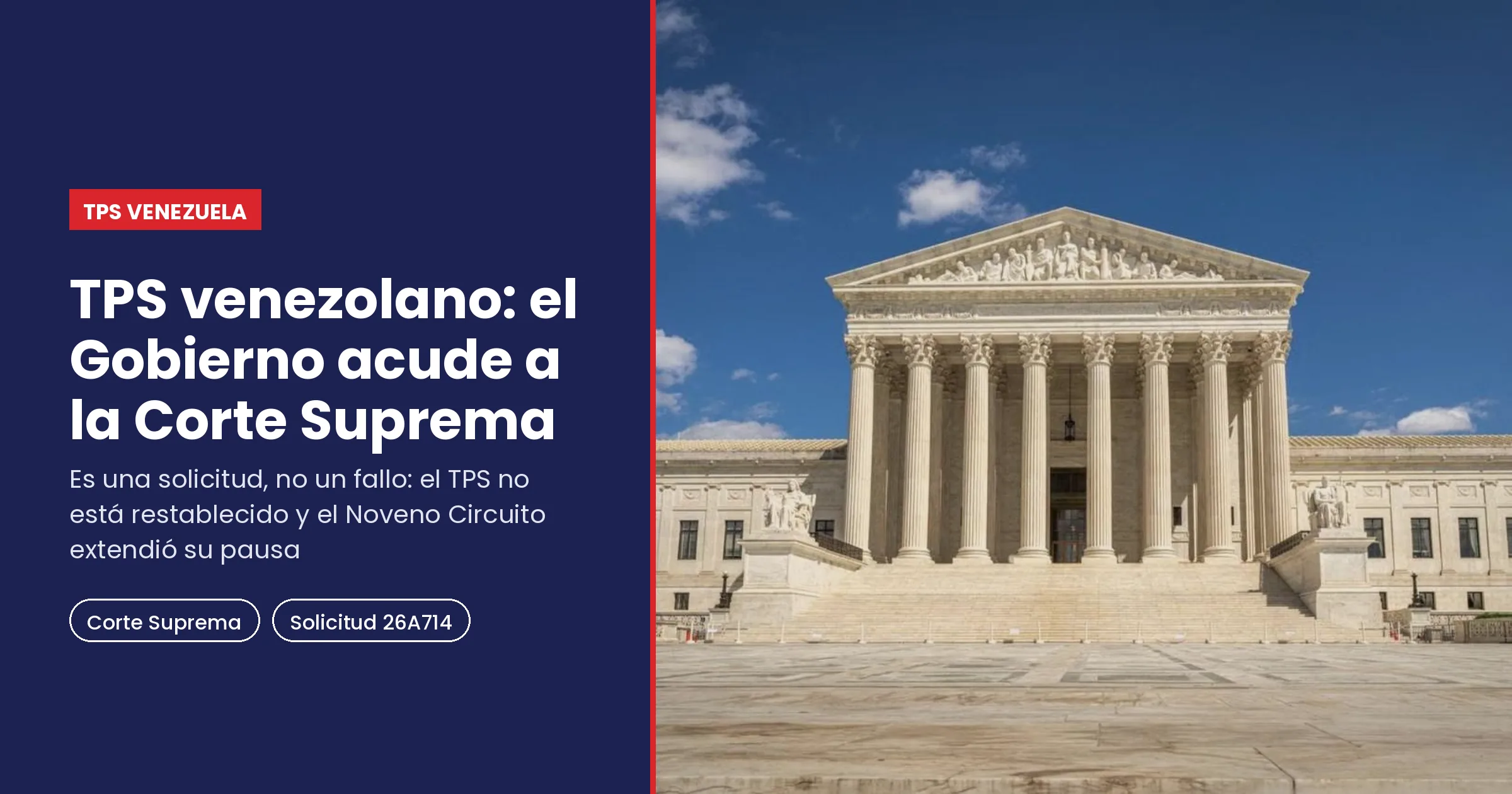
The application was docketed on November 18 as No. 26A714, in Mullin v. National TPS Alliance, and submitted to Justice Elena Kagan, according to the Supreme Court docket. The government is asking the Court to halt the ruling by U.S. District Judge Edward Chen in San Francisco, who found that officials lacked the authority to end Temporary Protected Status (TPS) for Venezuelans. The Ninth Circuit upheld that ruling in January 2026.
According to Reuters and AP, the Justice Department claims that restoring TPS would force the release of about 1,800 detained Venezuelans and could affect up to 332 removal orders. These are the government’s own figures, not independently verified data, and they do not describe the situation of every beneficiary. The plaintiffs, TPS holders and an advocacy group, say many Venezuelans have been detained, separated from their U.S.-citizen children, and deported, including to third countries.
What Changed Late on November 18, and What Happens on Friday, November 20?
Until that day, the Ninth Circuit’s pause was set to run out around November 20, as we explained in our article on the 14-day pause. But late on Wednesday, November 18, according to AP and Reuters, the court extended its hold on Judge Chen’s ruling until seven days after it issues a full decision in the case. That means Friday, November 20, is no longer, by itself, the date TPS could come back.
The Supreme Court application remains on the docket. As of publication, there is no decision and no response deadline listed. These are the possible scenarios, none of them confirmed:
- The Ninth Circuit’s pause stays in place: TPS remains unrestored until that court rules on the merits and seven days pass.
- The Supreme Court acts on the application: it could grant it, deny it, call for a response from the plaintiffs, or treat it as unnecessary given the new pause.
- The government withdraws or adjusts its request: this is a procedural possibility; nothing has been announced.
- The Ninth Circuit decides the case: its decision could still end up back at the Supreme Court.
We covered it on the Campos Law Firm Instagram:
What Does This Mean for You If You Had 2021 or 2023 TPS?
While the pause remains in effect, nothing changes in your documents. The 2021 designation ended on November 7, 2025, and the court-protected documents under the 2023 designation expired on October 2, 2026, as we reported when the last Venezuelan TPS documents protected by court order expired. In practice:
- Work permit (EAD): an expired Employment Authorization Document is not automatically renewed by this request or by the pause. You may have work authorization under another category, such as a pending asylum case; review it with an attorney.
- USCIS: we found no new, verifiable instruction from U.S. Citizenship and Immigration Services (USCIS) on this step; this is a court matter.
- If you are detained: according to AP, while the pause lasts the government remains free to detain and deport Venezuelans who previously held TPS. Make sure your family has your case details and your attorney’s contact information.
- If you have a final removal order: do not assume this request or a possible ruling protects you on its own. Options such as motions or requests for a stay depend on each case.
What Can You Do Now?
- Keep your documents: approval notice (I-797), EAD, I-94, re-registration receipts, and any notice from ICE or the Immigration Court.
- Do not travel without legal advice: leaving the U.S. without valid permission can close off ways to return or to seek relief.
- Get advice before acting: talk to an attorney before giving documents to your employer or signing ICE paperwork.
- Be wary of anyone charging to “reactivate” your TPS: no such process exists today.
- Follow official sources: the Supreme Court docket, the USCIS TPS page, and reliable news outlets, not social media rumors.
Protect Your Immigration Status with Campos Law Firm
Venezuelan TPS can change with a single court order, and each designation, document, and removal order has different effects. We do not make unrealistic promises: we provide serious legal representation backed by preparation and integrity. Attorney Alejandra Campos, a Venezuelan lawyer and the firm’s founder, and our team of immigration attorneys can review your case and your options.
Do not leave your immigration status to chance. Call us today at +1 (844) 922-6767 to schedule a free, confidential consultation in English or Spanish. Campos Law Firm: Legal Solutions in All Areas of Law.
With information from Reuters, the Associated Press, Al Jazeera and the U.S. Supreme Court docket.