
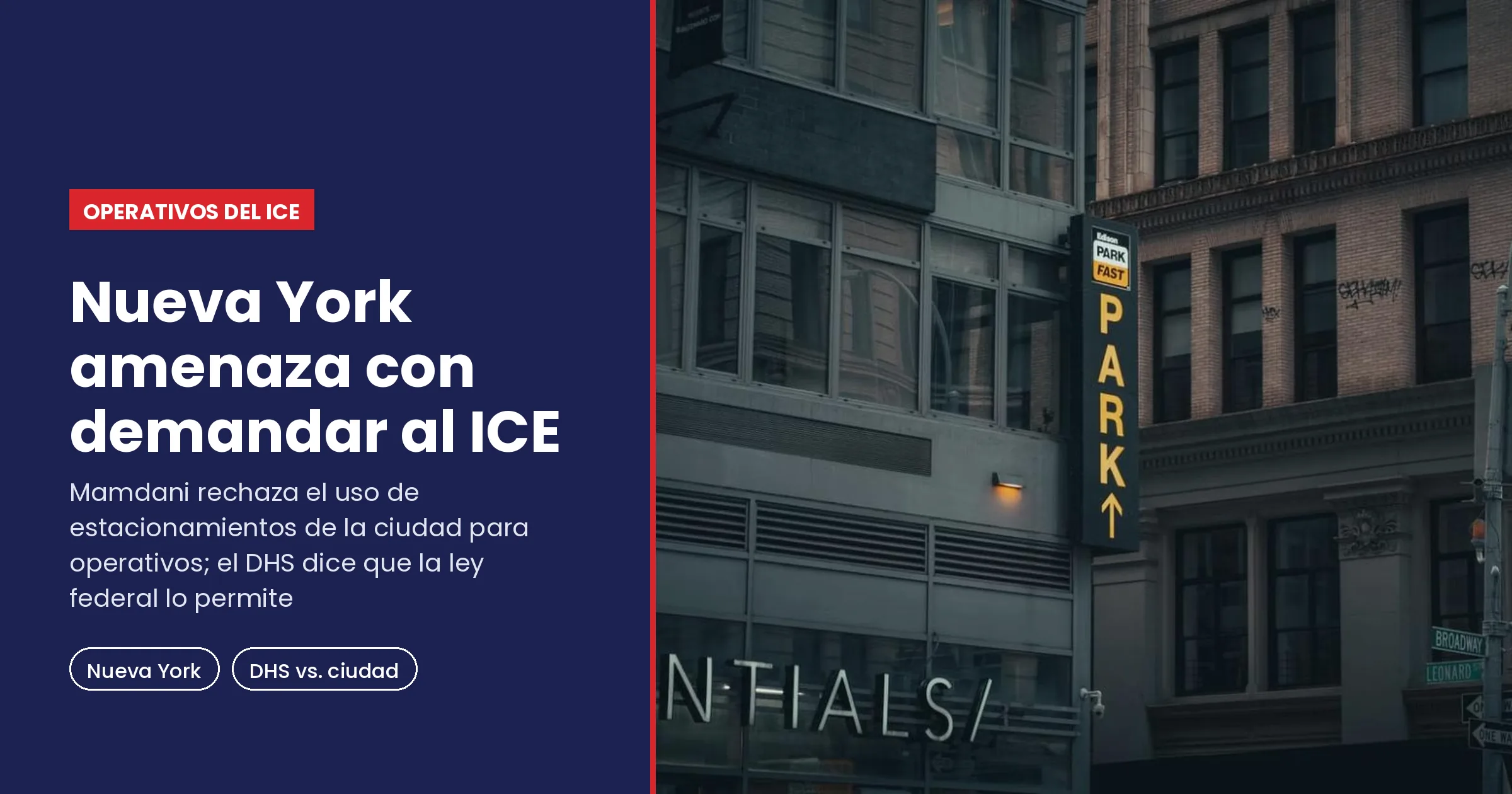
ICE parking lots became the latest flashpoint between New York City and the federal government on November 2, 2026, when Mayor Zohran Mamdani warned that the city will go to court if agents keep using city-owned lots as a base for enforcement operations.
At Campos Law Firm, we closely monitor developments in U.S. immigration policy to protect our clients’ rights and future. If you live in New York, this news may leave you with questions. Below, we explain what is known, what is not, and what you can do.
What happened with ICE parking lots in New York?
According to Politico, ABC7, and 6sqft, Mamdani sent a letter to Department of Homeland Security (DHS) Secretary Markwayne Mullin and senior Immigration and Customs Enforcement (ICE) officials. The letter asks DHS to issue guidance barring agents from staging or carrying out operations from city lots.
The letter points to lots in Queens along 111th Street, at the edge of Flushing Meadows Corona Park and near a city-run preschool, and a lot near Van Cortlandt Park in the Bronx. According to ABC7, agents had been gathering at those sites since July. Mamdani called the use “unauthorized and is therefore illegal” and warned: “If they keep coming back, we will see them in court.”
On the same day, the city announced a new Parks Department policy: staff must deny ICE access to non-public park areas unless agents present a judicial warrant, notify city lawyers, and avoid any physical or verbal confrontation.
How has DHS responded?
A DHS spokesperson said ICE’s presence in public parking lots is “fully authorized under federal law” and is standard practice for law enforcement agencies nationwide. According to Politico, the spokesperson also said Mullin will not issue the guidance the mayor requested and that ICE is “NOT slowing down.”
As of today, the city has not filed a lawsuit, and no judge has barred ICE from using those lots. This is a warning and an open legal dispute, not a court ruling. It is also unclear what kind of legal action the city would bring if it follows through.
The backdrop is the October 8 shooting in Marble Hill, where ICE agents wounded Oscar Belgal, 28, while he was in his car with his five-year-old son. According to the Mayor’s Office, those agents had staged the operation from a nearby private parking lot. We covered it in our article on ICE agents shooting at drivers.
Sanctuary city vs. federal authority: what changes for you?
New York’s sanctuary laws limit how much the police and city agencies cooperate with ICE. On October 15, federal Judge Ramón E. Reyes Jr. in Brooklyn dismissed the Trump administration’s lawsuit against those laws, finding that the Constitution bars the federal government from forcing the city to spend its resources enforcing federal immigration law.
But a city that does not cooperate does not take away ICE’s authority. ICE can still arrest people in New York, on the street, at work, or in public places. The current dispute is narrower: whether the federal government can use city property without the city’s permission.
That is why it pays not to read too much into the headlines:
- What does not change: ICE keeps its general authority to make immigration arrests in New York.
- What is in dispute: the use of city-owned lots as a base for operations.
- What is not covered: city protections do not extend to private lots or garages, which is why, in October, Mamdani and more than 100 officials urged their owners not to rent space to ICE.
- Outside New York: this dispute does not change the rules in other states.
What are your rights during an ICE raid?
Regardless of your immigration status, the Constitution protects you. Keep these points in mind:
- Right to remain silent: you do not have to say where you were born or what your status is. You can say you want to speak with a lawyer.
- Judicial vs. administrative warrant: to enter your home without your consent, agents need a warrant signed by a judge. An ICE warrant (such as Form I-205) is not enough for that. Do not open the door; ask them to slide the warrant underneath.
- Do not sign anything you do not understand: some documents may mean accepting voluntary departure or giving up a hearing.
- Do not run or show false documents: stay calm; lying or resisting can make your situation worse.
- Have a family plan: keep a lawyer’s number handy, decide who will care for your children, and keep important documents within reach.
In New York, the Mayor’s Office of Immigrant Affairs (MOIA) runs a legal support hotline: 800-354-0365. If a family member has already been detained, our immigration attorneys can help you locate them and review their options, such as bond or a defense in immigration court.
Protect Your Immigration Status with Campos Law Firm
Disputes between cities and the federal government can take months to resolve, and enforcement continues in the meantime. Knowing your rights and having a plan before any encounter with ICE is the best way to protect yourself and your family. Campos Law Firm is here to help you.
Do not leave your immigration status to chance. Call us today at +1 (844) 922-6767 to schedule a free, confidential consultation in English or Spanish. Campos Law Firm: Legal Solutions in All Areas of Law.
With information from Politico, ABC7 New York, 6sqft and the New York City Mayor’s Office.