
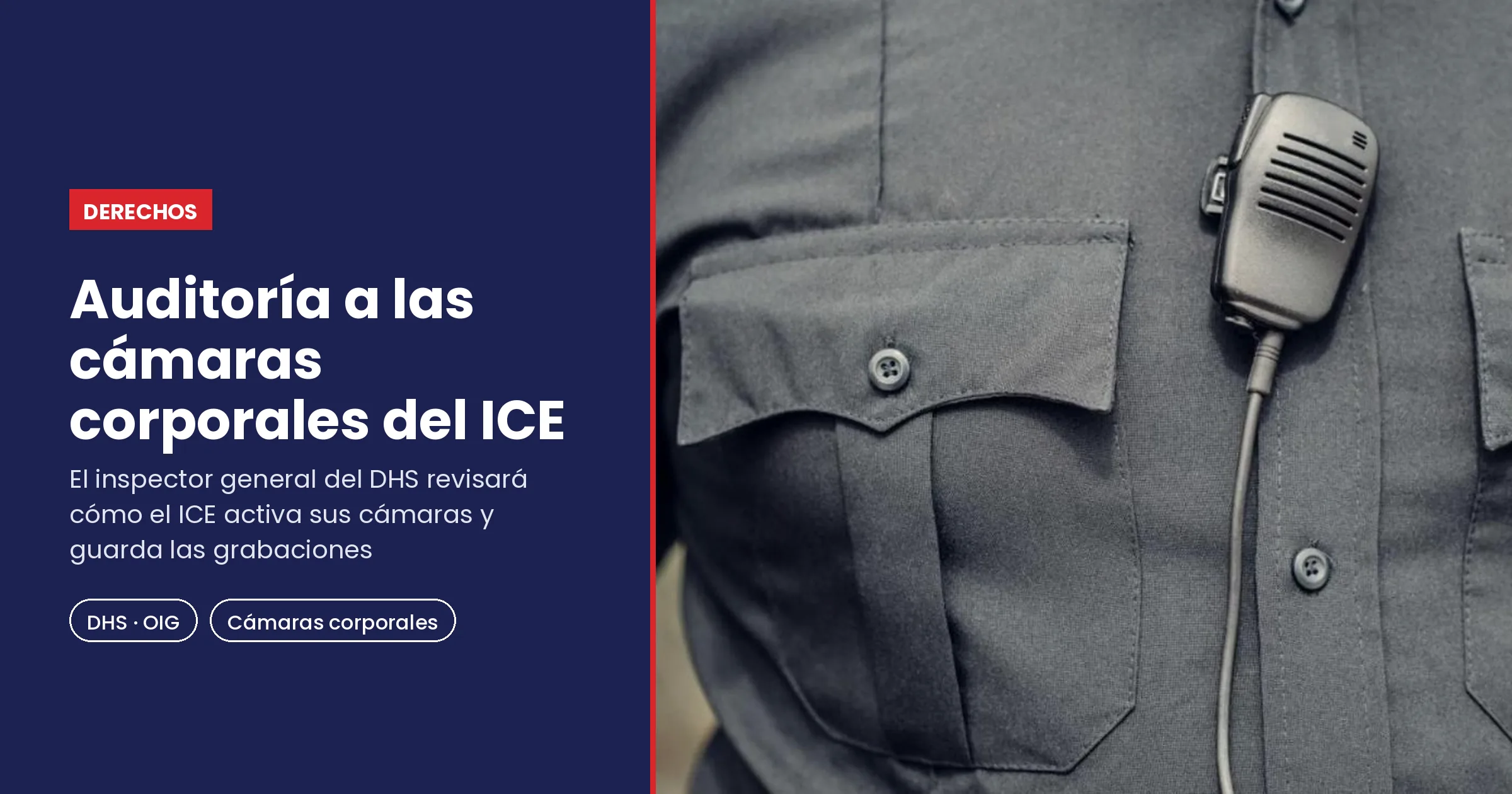
ICE body cameras are about to come under review by the Department of Homeland Security (DHS) inspector general, The Washington Post reported on November 10, 2026. At Campos Law Firm, we closely monitor developments in U.S. immigration policy to protect our clients’ rights and future. This matters because a recording can change the course of a complaint, a criminal case, or an immigration case.
Here is what we know, what we do not know yet, and what you can do.
What Will the DHS Inspector General Review?
The Office of Inspector General (OIG) is the internal watchdog of DHS. According to The Washington Post, it will examine whether Immigration and Customs Enforcement (ICE) complies with its body camera rules: when officers must wear them, when they must turn them on, and how footage is stored.
As of publication, we have not been able to review the OIG’s official notice or timeline, so we are not giving dates or naming specific field offices. What is clear is the starting point: ICE adopted its body-worn camera policy on January 12, 2024, and has expanded it in stages since then.
Why Now? The Earlier GAO Report
The audit comes a month after another oversight report. On October 14, 2026, the Government Accountability Office (GAO), a nonpartisan congressional agency, released a review of the camera programs at ICE and U.S. Customs and Border Protection (CBP).
GAO found that at six of 10 sites visited, personnel were unsure when they were required to activate their cameras. It also noted that ICE lacks automated controls to make sure cameras are turned on when policy requires it. According to the report, ICE had about 4,800 cameras as of April 2026.
DHS agreed with six of seven recommendations but rejected automatic activation. According to the AP, the department argued it could lead to unauthorized recording of sensitive interactions with informants or victims. The AP also reported that the officers involved in the fatal shooting of Lorenzo Salgado Araujo in Houston were not wearing body cameras. We have covered other cases of ICE agents shooting at drivers.
Does an Audit Mean ICE Body Cameras Revealed Abuses?
No. An audit checks whether an agency follows its own rules and usually ends with recommendations. It is not a penalty, it is not a criminal charge, and it does not decide individual cases. It also does not require ICE to hand footage to anyone.
That does not make it unimportant. If the OIG confirms gaps in how cameras are activated or how footage is kept, its findings can carry weight in Congress. According to WUNC, Rep. Bennie Thompson has proposed legally requiring body cameras for federal immigration agents. We explained how these oversight efforts work in our article on Democrats investigating ICE.
Why Does Footage Matter as Evidence?
A video can confirm or contradict the official report of an arrest. In a criminal case, a civil lawsuit, or an administrative complaint, it may be the most objective evidence available. In an immigration case, it can help challenge how certain evidence was obtained.
But footage is not kept forever. According to GAO, recordings classified as non-evidentiary are kept for only 60 to 180 days, so acting quickly is key. GAO also reported that ICE has received 675 Freedom of Information Act (FOIA) requests for footage, and every video is reviewed and redacted before release.
What Can You Do If You Encounter ICE Agents?
- Stay calm and do not obstruct: do not run, resist, or touch the officers. You have the right to remain silent and to ask for an attorney.
- Write everything down as soon as possible: date, time, exact location, names or badge numbers, vehicle plates, and whether officers wore a visible camera.
- Identify witnesses: get names and phone numbers of people who saw what happened, and save any video they recorded without interfering with the operation.
- Document injuries or damage: take photos and get medical care; keep the records.
- Request the footage early: an attorney can seek it through FOIA or within a court case. Sooner is better, given retention limits.
- Do not sign anything without legal advice: especially voluntary departure forms or waivers of hearings.
Protect Your Rights with Campos Law Firm
If you or a loved one had an encounter with ICE agents, what you do in the first few days can preserve important evidence. We do not make unrealistic promises: we provide serious legal representation backed by preparation and integrity. Our team of immigration attorneys can review your case and help you request the right records.
Do not leave your immigration status to chance. Call us today at +1 (844) 922-6767 to schedule a free, confidential consultation in English or Spanish. Campos Law Firm: Legal Solutions in All Areas of Law.
With information from The Washington Post, the GAO, the AP, ICE and WUNC.