
Immigration grant conditions on certain state public safety and juvenile justice funds were blocked on November 4, 2026, by a federal judge in Rhode Island. At Campos Law Firm, we closely monitor developments in U.S. immigration policy to protect our clients’ rights and future. The ruling matters for 22 states, including Colorado, and the District of Columbia, but it is not a nationwide ban on cooperation with Immigration and Customs Enforcement (ICE).
Here is what we know, what we do not know yet, and what you can do.
What Did the Judge Decide About Immigration Grant Conditions?
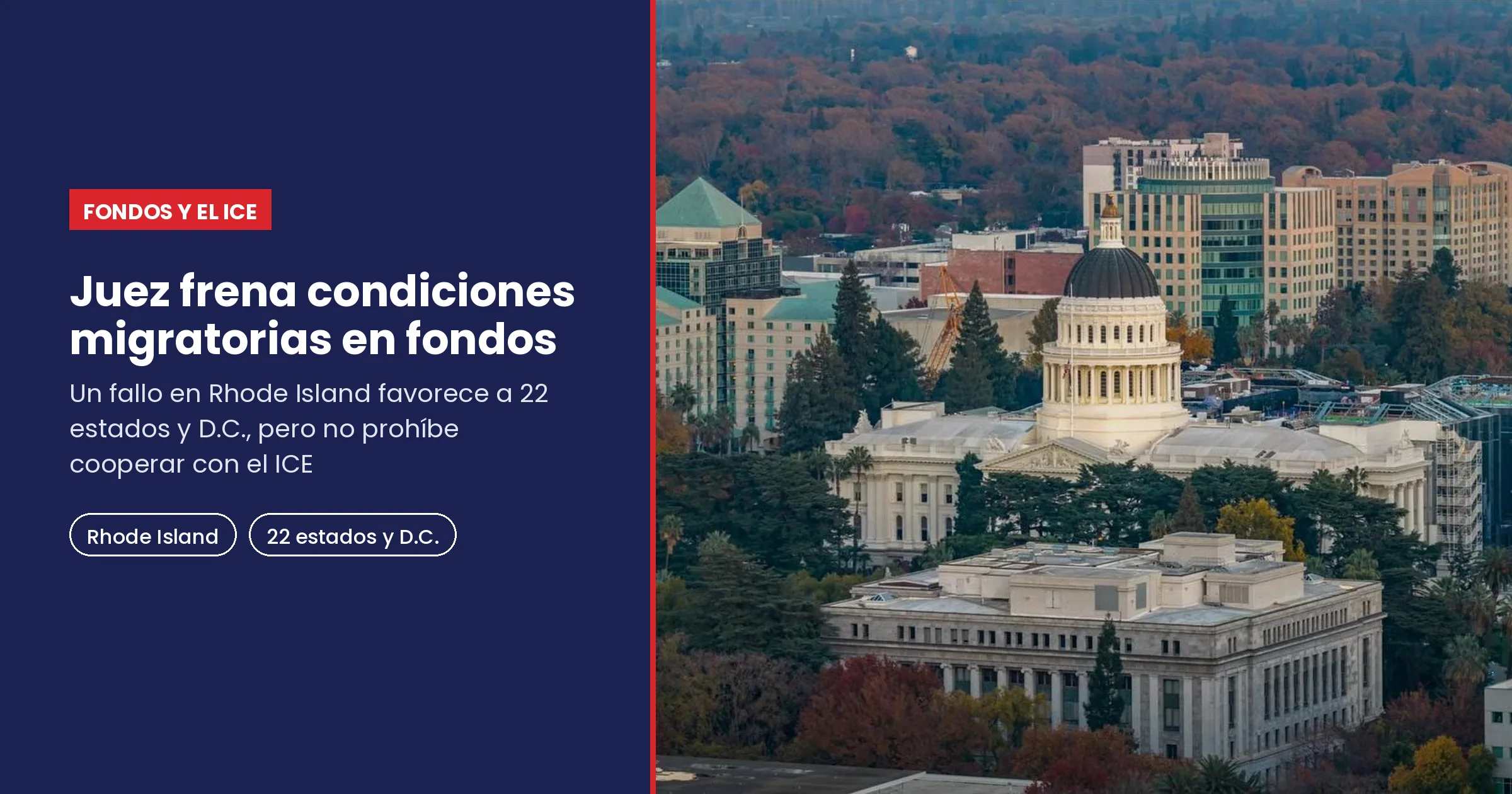
Chief U.S. District Judge John J. McConnell Jr. of the District of Rhode Island declared unlawful the conditions the Department of Justice (DOJ) had attached to certain grants and permanently barred their enforcement. The case is State of New Jersey v. United States Department of Justice, according to Reuters.
The conditions required states receiving the money to give federal authorities access to people in state custody suspected of being in the country unlawfully, and to notify the Department of Homeland Security (DHS) when those people were released. The states argued that DOJ went beyond the authority Congress gave it and violated the Spending Clause of the Constitution.
Which Funds and Which States Does the Ruling Cover?
According to Reuters, the ruling covers two specific programs: the Byrne State Crisis Intervention Program (Byrne SCIP) and grants from the Office of Juvenile Justice and Delinquency Prevention (OJJDP). The New Jersey Attorney General’s Office, which co-led the lawsuit, also referred to Byrne JAG, the main federal grant program for local police. However, Reuters reports that the ruling did not decide that question, because DOJ maintains that a court order from Trump’s first term already bars similar conditions on Byrne JAG.
The coalition includes Colorado, California, New York, Illinois, New Jersey, Rhode Island, and other Democratic-led states, plus the District of Columbia. The lawsuit began in August 2025 over crime victim funds (VOCA); after that first challenge, the administration dropped the conditions on more than $1.3 billion in those funds. In August 2026, the states amended the lawsuit to include public safety and juvenile justice funding.
“The federal government cannot unlawfully politicize law enforcement and public safety,” said New Jersey Attorney General Jennifer Davenport. DOJ did not immediately comment and may appeal to the U.S. Court of Appeals for the First Circuit.
What Changes, and What Does Not, for Immigrants in Colorado and Other States?
This ruling is about federal money, not about ICE’s powers. What does change is that, for now, the government cannot use these specific funds to pressure the plaintiff states into cooperating with immigration enforcement.
What does not change is just as important:
- ICE keeps operating: it can make arrests in any state, including Colorado, with or without help from local police.
- State laws stay the same: how much jails and police cooperate with ICE depends on state and local law, which this ruling does not change.
- 287(g) agreements and detainers do not disappear: where they exist, they still work under their own rules.
- It is not final: the government can appeal, and other grant programs are not covered by the decision.
It is a fight similar to the one we described when New York City threatened to sue ICE over the use of city parking lots: local and federal governments are arguing over how far cooperation goes, but your rights in front of an officer do not depend on how those lawsuits end.
What Can You Do Now?
- Know your rights with an officer: you have the right to remain silent and to not sign documents before talking to an attorney.
- Have a family plan: keep copies of your documents and your attorney’s phone number in a safe place, and decide who will care for your children if you are detained.
- If a relative is in a local jail: ask whether ICE has filed a detainer request and talk to an attorney before posting criminal bail.
- Do not rely on headlines: a win for the states in court does not give you immigration status or stop a case in Immigration Court.
Protect Your Immigration Status with Campos Law Firm
Court rulings on funding and cooperation change the climate, but they do not change your case on their own. We do not make unrealistic promises: we provide serious legal representation backed by preparation and integrity. Our team of immigration attorneys and our Aurora, Colorado office can review your situation and explain your options.
Do not leave your immigration status to chance. Call us today at +1 (844) 922-6767 to schedule a free, confidential consultation in English or Spanish. Campos Law Firm: Legal Solutions in All Areas of Law.
With information from the news agency Reuters, the website Courts Cast, the outlet The Lakewood Scoop and the Vermont Attorney General’s Office.