USCIS officially announces the end of the 2022 regulation and tightens the requirements to obtain a Green Card
On July 16, 2026, the Department of Homeland Security (DHS) marked a turning point in United States immigration policy by issuing a final rule that officially rescinds the 2022 Biden-era regulation.
This new measure seeks to ensure that immigrants in the country are self-sufficient and do not rely on taxpayer-funded benefits, aligning with the interpretation of the Immigration and Nationality Act that considers anyone who is likely to become a “public charge” as inadmissible.
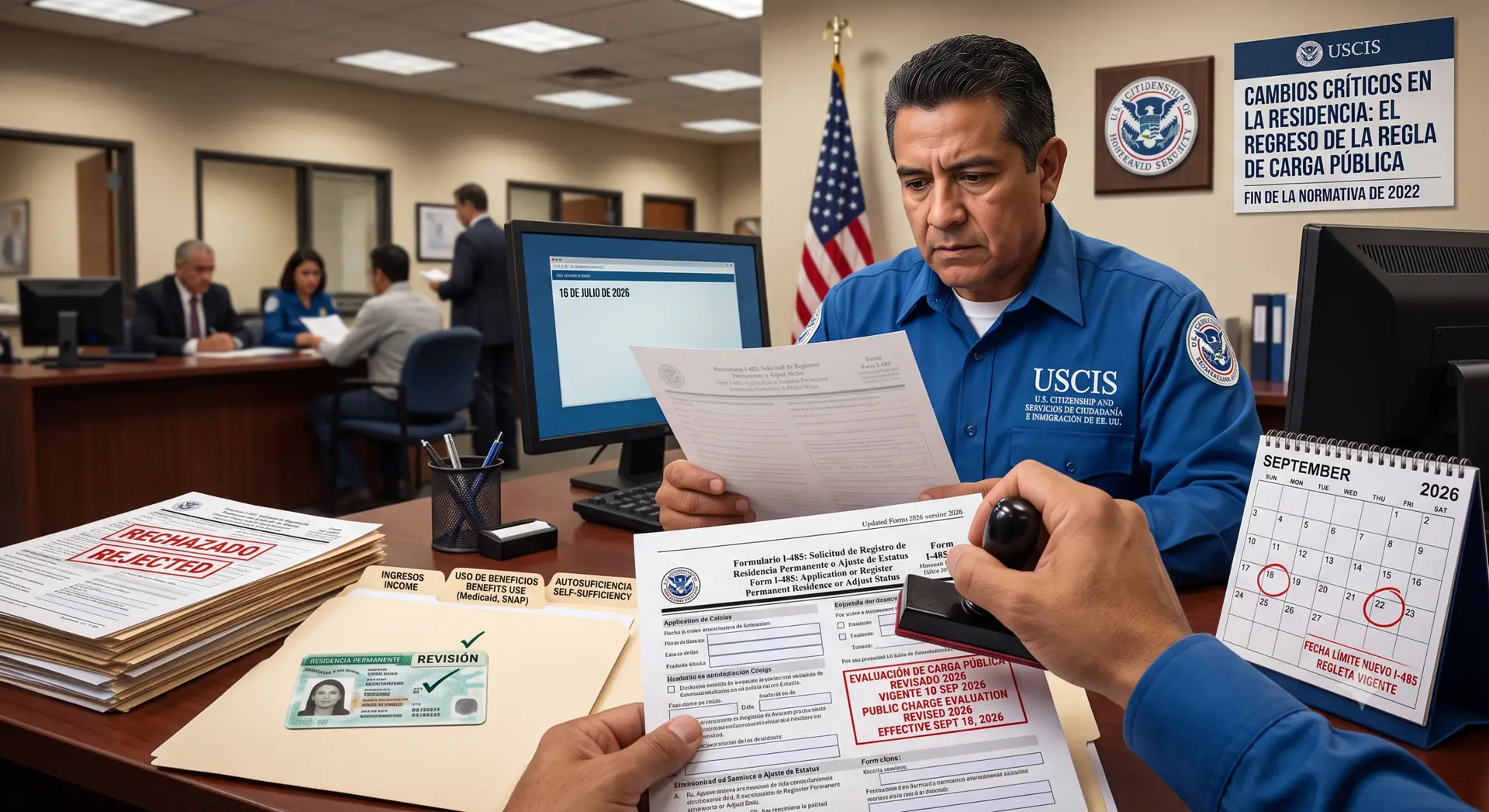
Under this new regulation, officers of the United States Citizenship and Immigration Services (USCIS) regain the authority to conduct comprehensive case-by-case assessments. It will now be possible to consider whether permanent residency applicants have utilized a broader range of public benefits, such as Medicaid, food stamps (SNAP), and public housing assistance.
It is vital for applicants to mark September 18, 2026, on their calendars, as this is the official date the rule will take effect. Starting on that day, USCIS will publish a revised version of Form I-485 (Application to Register Permanent Residence or Adjust Status). Any application using an old version of the form that is submitted or postmarked on or after this date will be automatically rejected.
There are categories that remain exempt by law, including refugees, asylees, Special Immigrant Juveniles (SIJS), victims of trafficking (T Visa), victims of crimes (U Visa), and those protected by the Violence Against Women Act (VAWA).