

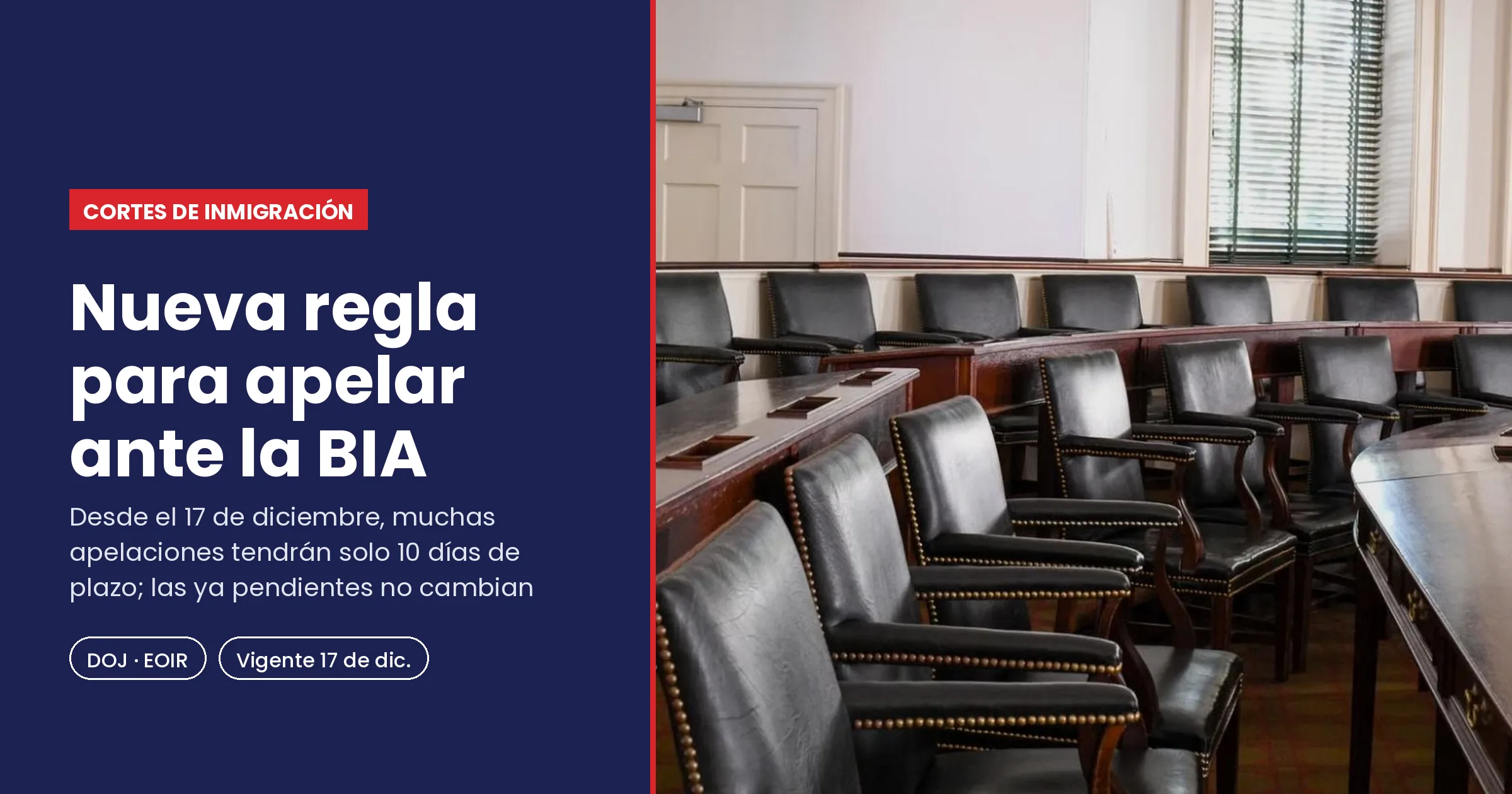
The BIA final rule, which changes how you appeal an immigration judge’s decision, was published in the Federal Register on November 17, 2026. At Campos Law Firm, we closely monitor developments in U.S. immigration policy to protect our clients’ rights and future. The rule confirms, with minor changes, the interim rule issued in February and takes effect on December 17, 2026.
The first thing to know: appeals are not suspended, and the rule does not apply to appeals that are already pending. Here is what we know, what we do not know yet, and what you can do.
What Is the BIA, and What Did the Justice Department Publish?
The Board of Immigration Appeals (BIA) is the administrative body that reviews immigration judges’ decisions. It is part of the Executive Office for Immigration Review (EOIR), within the Department of Justice (DOJ). If a judge orders your removal or denies you relief, the next step is usually an appeal to the BIA.
The rule is titled “Appellate Procedures for the Board of Immigration Appeals” (document 2026-23320, RIN 1125-AB37) and is signed by Acting EOIR Director Sirce E. Owen. It finalizes the February 6, 2026, interim rule, which drew 1,615 comments. The DOJ cites the backlog: according to the text, pending BIA cases grew from 35,837 in fiscal year 2017 to 325,774 in fiscal year 2026.
What Changes Under the BIA Final Rule?
Based on the published text and analyses from the Catholic Legal Immigration Network (CLINIC) and other attorneys, these are the main changes:
- Appeal deadline: in many cases, it drops from 30 to 10 days. The 30-day deadline remains, as the statute requires, when the judge decided an asylum claim on the merits. Denials of cancellation of removal, adjustment of status, waivers, or bond, among others, move to 10 days.
- Summary dismissal by default: the BIA will dismiss an appeal without opinion within 15 days of filing unless a majority of its permanent members votes, within 10 days, to accept it for review. In that case, the judge’s decision becomes the final decision.
- The Notice of Appeal matters more: arguments left out of the Notice of Appeal (Form EOIR-26) may be treated as waived.
- Briefs: in accepted cases, both sides file briefs at the same time, with no reply briefs, and extensions are granted only in exceptional circumstances.
Compared with the interim rule, the DOJ made minor adjustments: it reworded summary dismissal orders, required the Board to wait if security checks expire before it rules, and set a 10-day deadline to appeal attorney discipline decisions.
Who Is Affected, and What Does Not Change?
The rule affects anyone who wants to appeal an immigration judge’s decision issued on or after December 17, 2026. The DOJ states that “this rule does not apply to appeals already pending before the Board.” Motions to reopen or reconsider remain available.
There is important background. On March 8, 2026, U.S. District Judge Randolph D. Moss in Washington, D.C., partially vacated the interim rule, including the 10-day deadline, because it skipped public comment. According to Newsweek, the DOJ then told judges that the deadline remained 30 days. The Department says the final rule cures that defect.
Criticism continues. “It will be nearly impossible, even for people with attorneys, to file an appeal in 10 calendar days,” Hunter Hammill, policy counsel at the American Immigration Lawyers Association (AILA), told Newsweek. If your case involves asylum, also see what is at stake in the Supreme Court asylum ban review.
What Can You Do Now If You Have a Case in Immigration Court?
- If you already appealed: your appeal moves forward. Ask your attorney for the case status and briefing dates.
- If you get a decision before December 17: confirm your deadline with your attorney and do not let it pass. Filing one day late can end your chance to appeal.
- If your final hearing is after December 17: talk with your attorney in advance about whether you would appeal, because in many cases you will have only 10 days.
- Update your address: if you move, file Form EOIR-33 (with the court or the BIA, depending on where your case is) within 5 days. If notices do not reach you, you can miss deadlines.
- Know the federal option: after a final order, the law gives you 30 days to seek review in a federal court of appeals.
With more immigration judges deciding cases, as when EOIR swore in 22 new immigration judges, deadlines matter more than ever.
Protect Your Immigration Status with Campos Law Firm
With shorter deadlines, an appeal requires preparation before the final hearing. We do not make unrealistic promises: we provide serious legal representation backed by preparation and integrity. Our team of immigration attorneys can review your file, your deadlines, and your options.
Do not leave your immigration status to chance. Call us today at +1 (844) 922-6767 to schedule a free, confidential consultation in English or Spanish. Campos Law Firm: Legal Solutions in All Areas of Law.
With information from the U.S. Executive Office for Immigration Review, the Federal Register, CLINIC and Newsweek.