

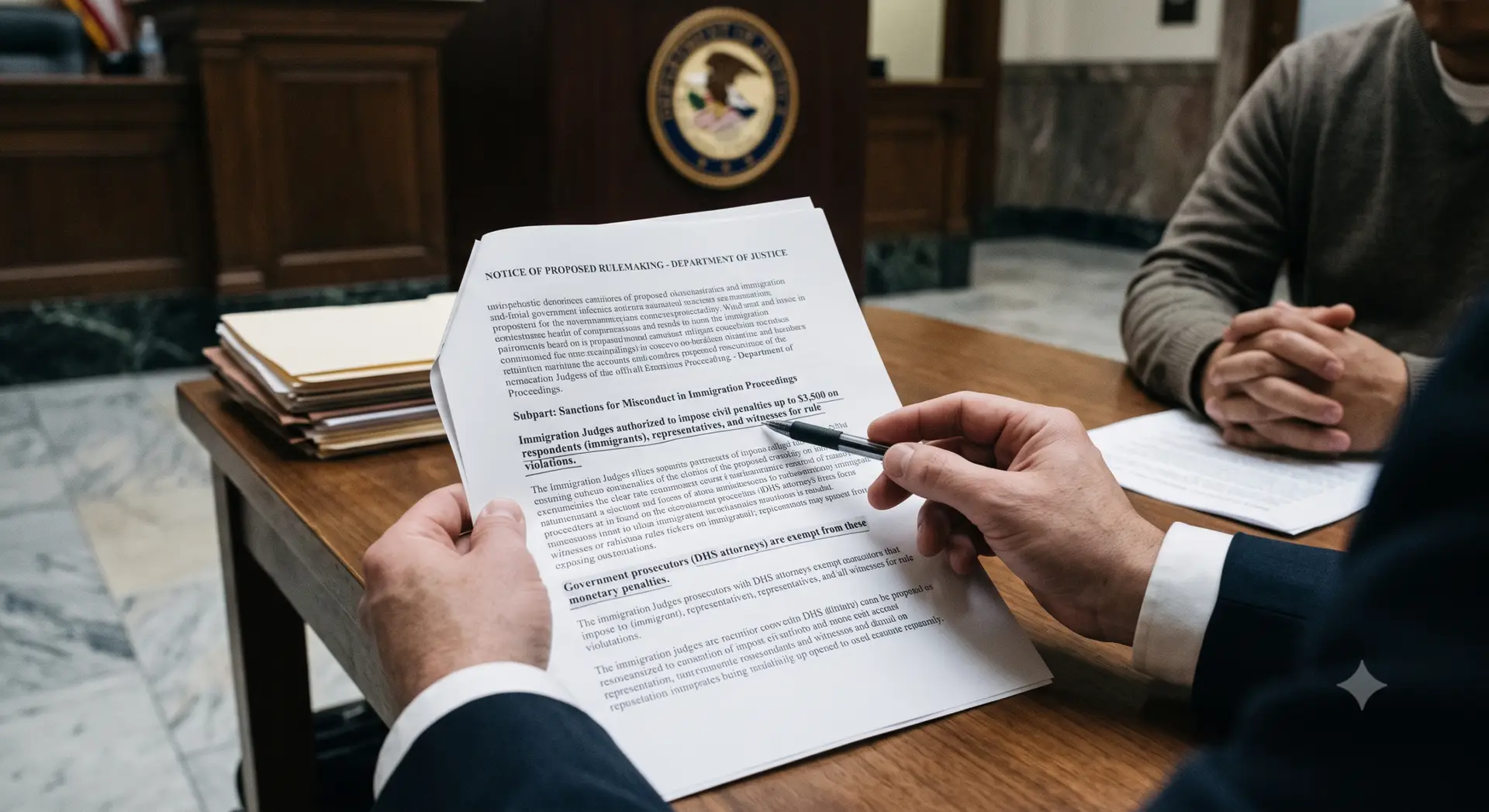
The Department of Justice (DOJ) is planning a major change that will affect anyone with a pending immigration case. The government wants to grant immigration judges a new power to penalize attorneys, their clients (immigrants), and even witnesses with monetary fines if they fail to follow the judge’s orders.
This new plan would allow, for the first time in history, judges to impose fines ranging from $1,000 to $3,500. According to the Department of Justice, these penalties are necessary for judges to maintain full control over what happens in their courtrooms.
Why Could You Be Fined?
Under this new proposal, a judge could determine that someone is showing “contempt” or being disobedient if the following occurs:
- Repeatedly arriving late to court hearings.
- Ignoring written orders issued by the judge.
- Engaging in disorderly conduct inside the courtroom.
- Lying or making false statements.
A Plan Many Call Unfair
What has concerned immigrant advocates the most is that this rule is not applied equally. The proposal clearly states that government attorneys (those working for the Department of Homeland Security) cannot be penalized with these fines by the judges.
Experts from the American Immigration Lawyers Association (AILA) denounce this as a scare tactic. They argue that the government is merely seeking to intimidate the attorneys who defend our community, while the prosecutors seeking deportations would face absolutely no punishment for poor behavior.
Is This Change Legal?
Many legal experts warn that this proposal could be unconstitutional. They explain that immigration courts are an administrative branch of the government and do not possess the same inherent authority as “normal” Article III federal courts to impose these types of punitive fines.
Former judges have commented that this aims to create an environment of fear. First, they argue, judges are pressured to speed up deportations, and now the administration wants to intimidate immigrants and their defenders so they cannot fight their cases with peace of mind.
What Can You Do?
For now, this rule is only a proposal and is not yet being enforced. The government is required to review public opinion and has provided a 60-day window for the public to submit their comments and grievances.
If you have an active case in immigration court, the best course of action is to always arrive on time to your hearings and always speak the truth to avoid any complications should this rule be approved. Now more than ever, it is absolutely critical that you maintain open, honest communication with your attorney and strictly follow their legal advice.
If you are concerned about how these proposed changes might affect your pending immigration case, do not navigate this complex system alone. Contact our experienced legal team today for guidance and dedicated representation.