

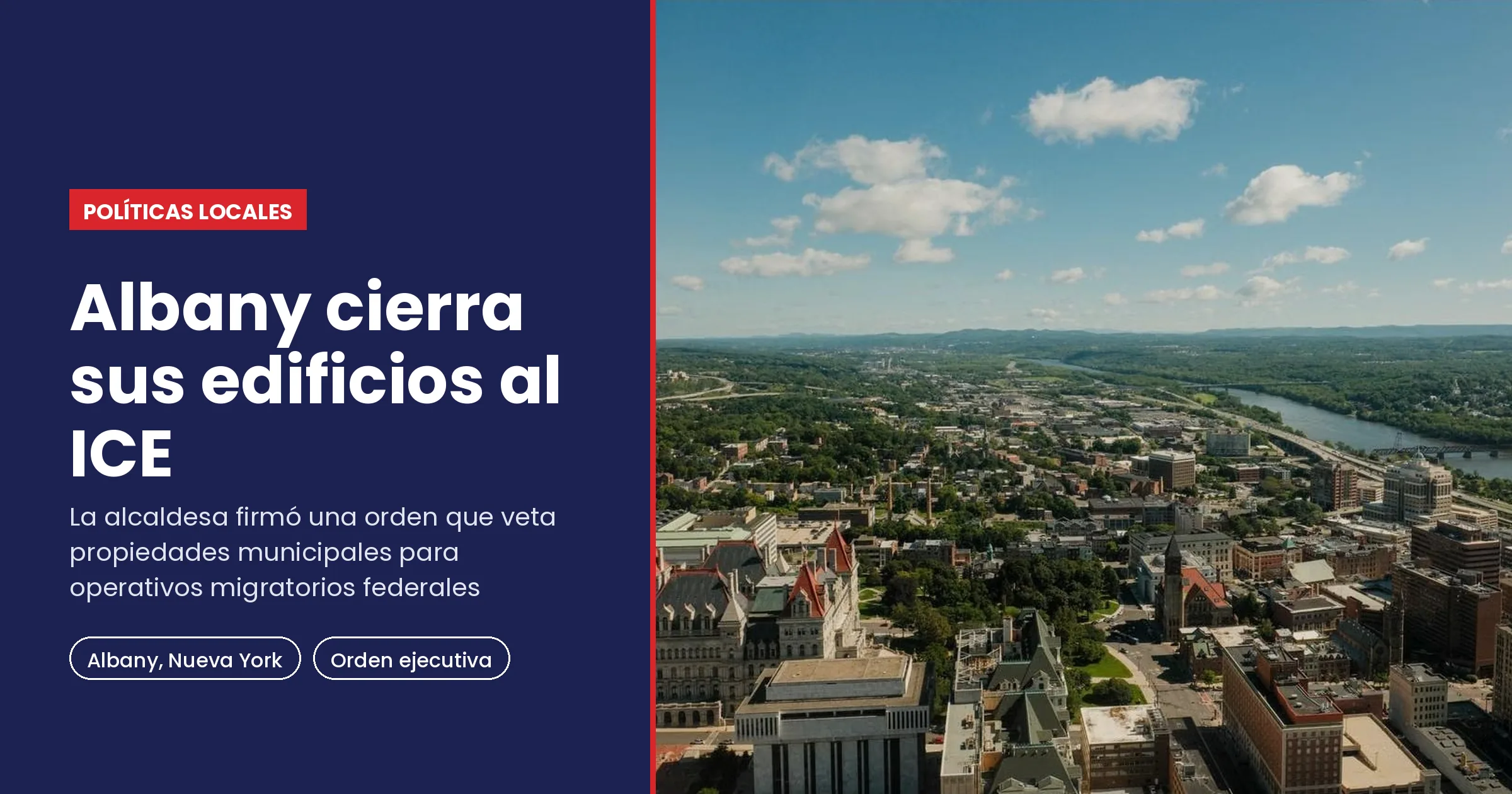
The Albany ICE executive order, signed on November 12, 2026 by Mayor Dorcey Applyrs, bars city-owned property from being used for federal immigration operations. At Campos Law Firm, we closely monitor developments in U.S. immigration policy to protect our clients’ rights and future. If you live in Albany, it is important to understand what it actually covers.
Here is what we know, what we do not know yet, and what you can do.
What Does the Albany ICE Executive Order Ban?
According to CBS6 Albany and Spectrum News 1, the order prohibits the use of city property for federal immigration enforcement, including staging operations, processing, or holding people in detention. It also calls for documenting federal immigration enforcement activity in the city. As of publication, we have not been able to review the full text or its official number.
The order also puts in writing practices the Albany Police Department (APD) already followed: visible badges, body-worn cameras, and officers identifying themselves as members of the department. According to CBS6, the mayor said some residents have mistaken her officers for Immigration and Customs Enforcement (ICE) agents, and that trust is essential to public safety.
Applyrs said the measure aims to “strengthen the protections for our immigrant, refugee and New American communities.” Migdalia Jimenez, regional executive director of Capital District Latinos, said many residents are afraid to leave their homes.
Why Now, If ICE Has Not Used City Property?
According to CBS6, the administration could not recall any case of ICE using city property. The mayor described the order as both reactive and proactive, pointing to the detention of a father and his 4-year-old child in the community.
The order builds on protections set by former Mayor Kathy Sheehan, who in April 2017 barred city police and departments from asking for proof of citizenship or immigration status to provide services. At the county level, the Albany County Legislature voted 29-9 on March 9, 2026, to direct county agencies, including the sheriff’s office, not to cooperate with ICE or Border Patrol operations, according to WAMC.
How Does It Fit With New York Law and Other Cities?
The state is moving in the same direction. The Local Cops, Local Crimes Act, signed by Gov. Kathy Hochul on May 27, 2026, bars local governments from agreements to hold people for civil immigration violations. The Attorney General’s office set a November 25, 2026 deadline to end those contracts. We explained the litigation in our article on the ruling that keeps New York’s 287(g) ban in place.
Albany joins other cities limiting the use of their resources. In New York City, Mayor Zohran Mamdani warned he would sue if ICE kept using municipal parking lots, as we covered in our article on the city parking lots. In Houston, Mayor John Whitmire narrowed in November the cases in which police contact ICE.
What Changes and What Does Not Change for You?
The order is a city policy, not a national law. It limits what the city does with its buildings, land, and staff, but it does not stop ICE from operating in Albany under its own federal authority. To avoid drawing the wrong conclusions:
- What does not change: ICE can still make arrests on the street, at work, or on private property, as federal law allows.
- What does change: the city should not lend its property to stage, process, or hold people in those operations.
- Your status stays the same: the order does not create a permit, does not stop a removal order, and does not replace a legal defense.
- Disputes are possible: the federal government has challenged similar measures in other cities, and the real reach will depend on how it is applied.
What Can You Do If You Encounter ICE Agents?
- Ask for identification: you can ask agents who they are and which agency they work for. The order is meant to help people tell local police apart from ICE.
- Remain silent: you have the right not to answer questions about where you were born or your status, and to ask for an attorney.
- Do not open the door without a judicial warrant: ask agents to show, under the door or through a window, a warrant signed by a judge. An ICE administrative warrant is not the same.
- Do not lie or show false documents: it can seriously harm your case.
- Do not sign anything without legal advice: especially voluntary departure forms or waivers of hearings.
- Have a family plan: keep an attorney’s number and key documents in a safe place.
Protect Your Immigration Status with Campos Law Firm
Local policies can reduce cooperation with ICE, but they are not a substitute for a legal strategy for your case. We do not make unrealistic promises: we provide serious legal representation backed by preparation and integrity. Our immigration attorneys can review your situation and explain your options.
Do not leave your immigration status to chance. Call us today at +1 (844) 922-6767 to schedule a free, confidential consultation in English or Spanish. Campos Law Firm: Legal Solutions in All Areas of Law.
With information from CBS6 Albany, Spectrum News 1, the Times Union, WAMC and the New York Governor’s Office.