If you are pregnant, recently gave birth in the United States, or have children born here, the headline probably alarmed you: a federal judge declined to block the new executive order on birthright citizenship. Before drawing conclusions, read the fine print — the reason she declined is procedural, not a ruling on the merits.
At Campos Law Firm, we closely monitor developments in U.S. immigration policy to protect our clients’ rights and future. Below is what was decided, what the order says, and what it means for your family today.
What is happening?
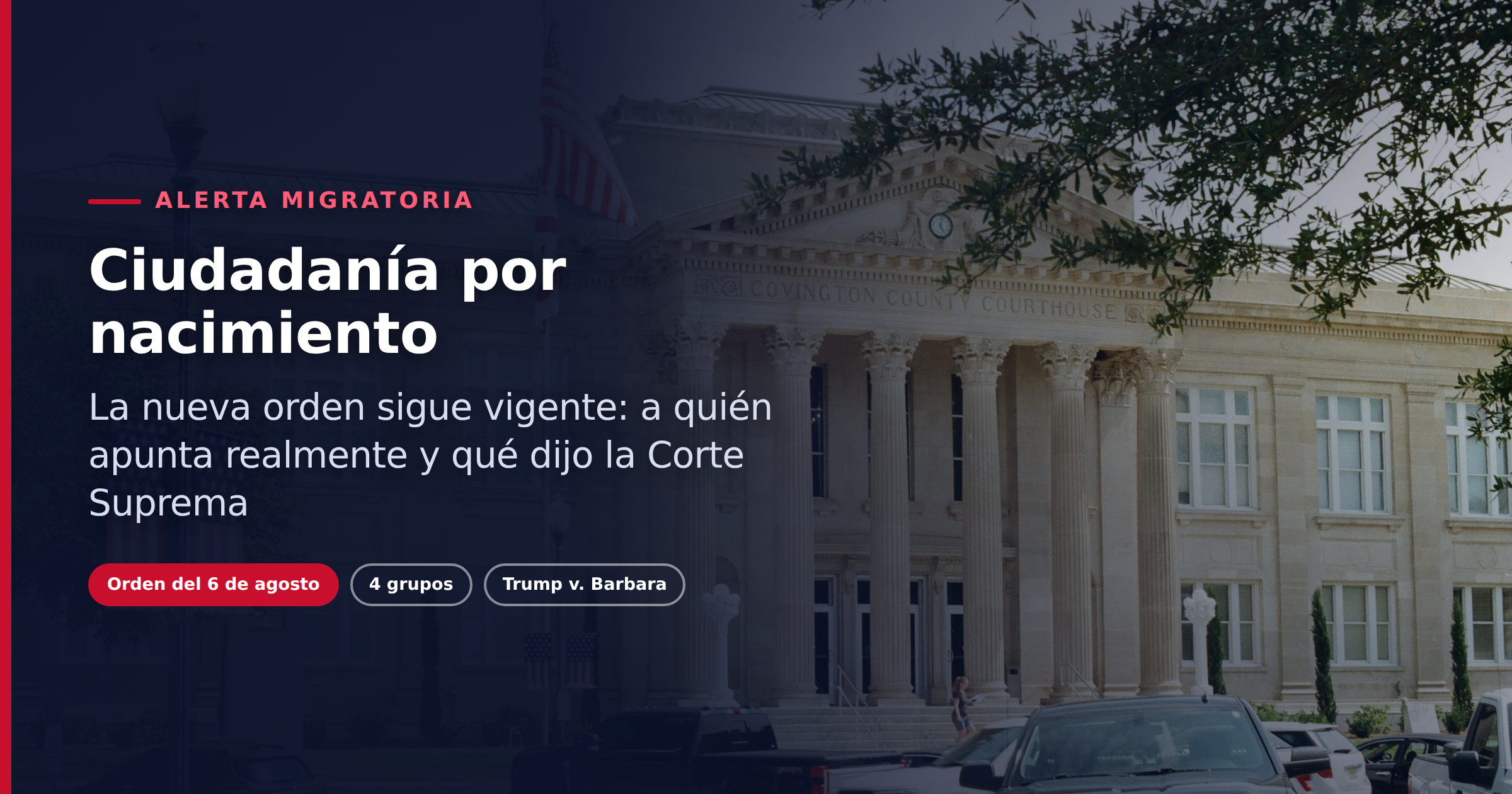
On August 28, 2026, U.S. District Judge Deborah Boardman, in Maryland, declined to immediately block the executive order President Donald Trump signed on August 6, 2026, which seeks to restrict automatic birthright citizenship in certain circumstances.
The reason was procedural: the plaintiffs had not yet formally amended their lawsuit to include the new order, so enjoining it at that moment was not proper. The judge allowed them to supplement their complaint and set an expedited briefing schedule.
At the same time, Boardman voiced serious doubts about the order’s legality. Of the so-called “birth tourism” exception, she remarked that, as far as she could tell, “this is unprecedented,” and questioned whether recent case law supported it.
According to reporting, federal agencies are to issue implementation guidance by September 5, 2026. Until then, there are no published procedures explaining how it would work in practice.
Which groups does the order target?
The August 6 order does not eliminate birthright citizenship generally. By its terms, it targets U.S.-born children of four specific groups:
- Mothers who traveled to the country specifically to give birth (what the order calls “birth tourism”).
- Parents working for foreign governments in the United States.
- Parents who committed fraud to obtain citizenship.
- People classified as “alien enemies.”
That is a far narrower list than the January 2025 order, which sought to deny citizenship to children of parents who were in the country unlawfully or temporarily.
Is my U.S.-born child still a citizen?
This is the question we hear most, and the key point has already been settled by the Supreme Court.
On June 30, 2026, in Trump v. Barbara, the Supreme Court struck down the January 2025 executive order and confirmed that the Fourteenth Amendment’s Citizenship Clause grants automatic citizenship to children born in the United States to parents who are unlawfully or temporarily present. In the words of Chief Justice John Roberts: “Under the Constitution, they are citizens at birth.”
In other words: if your child was born in the United States while you were here without status, on a temporary visa, with Temporary Protected Status (TPS), or with a pending case, that Supreme Court precedent protects them — and the new order is not aimed at that group.
Even so, this is not nothing. An executive order that is in effect with no published guidance creates uncertainty at agency counters, in vital records offices, and in passport applications. And the four categories use terms — “birth tourism,” “fraud,” “alien enemies” — that are broad and have not yet been defined by any agency.
What can you do now?
- Keep your child’s state-issued birth certificate and, if possible, apply for their U.S. passport: it is the strongest and most portable proof of citizenship.
- Gather evidence of your presence and ties in the country around the time of the birth: lease, bills, prenatal records, employment, tax filings.
- Do not sign or make statements about your reason for entering the country without legal advice, especially if you entered on a visitor visa and later gave birth.
- Be wary of rumors and of anyone offering to “fix” your child’s citizenship for a fee: there is no new application to file.
- Talk to an immigration attorney if anyone asks for extra documents to recognize your child’s citizenship, or if you receive any notice about it.
Protect Your Family with Campos Law Firm
The order remains in effect, the lawsuit continues, and further court decisions are likely in the coming weeks. No family should make decisions — traveling, moving, holding off on a passport — based on a headline whose implementing rules have not even been published.
Campos Law Firm is a firm built from immigrants, for immigrants, and we guide families through citizenship, residency, and immigration defense matters. If you have questions about your children’s status or how this order might touch your case, we are here to help.
Do not leave your immigration status to chance. Call us today at +1 (844) 922-6767 to schedule a free, confidential consultation in English or Spanish. Campos Law Firm: Legal Solutions in All Areas of Law.