
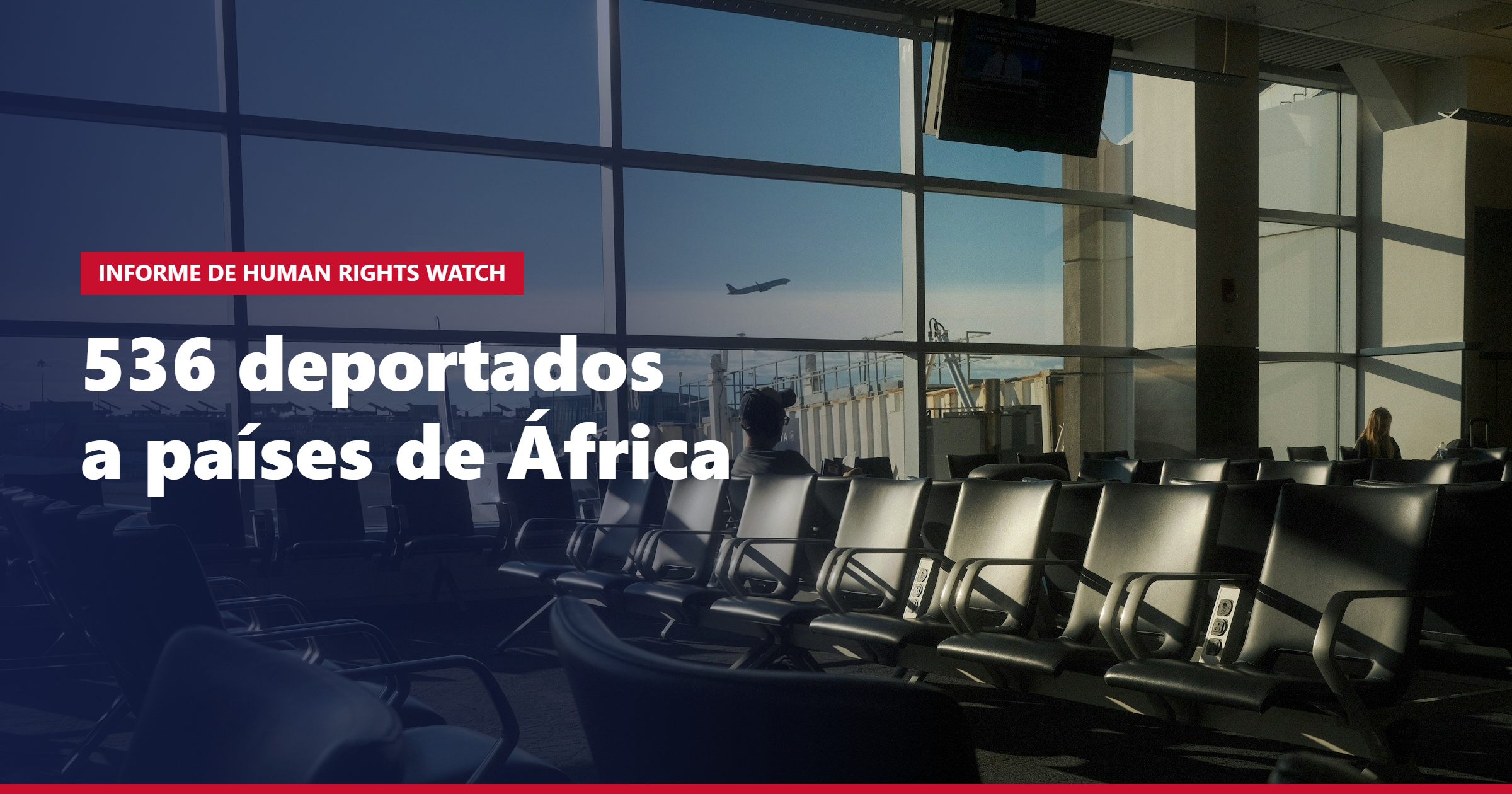
At Campos Law Firm, we closely monitor developments in U.S. immigration policy to protect our clients’ rights and future. On October 8, 2026, Human Rights Watch (HRW) published a 125-page report titled “To Scare People” on U.S. deportations to African countries that are not the deportees’ countries of origin.
These are the organization’s findings, not a court’s: no ruling has declared all of these deportations unlawful. Below, we explain what the report documents and what you can do.
What Did Human Rights Watch Document?
According to HRW, between January 20, 2025, and August 5, 2026, the U.S. expelled 536 people to African countries other than their own. The organization relied on Immigration and Customs Enforcement (ICE) deportation data, data from the Executive Office for Immigration Review (EOIR), and 24 interviews with people deported to Cameroon, the Central African Republic, the Democratic Republic of Congo, Equatorial Guinea, Eswatini, and South Sudan.
HRW also estimates that the third-country deportation program has moved nearly 28,000 people to more than 50 countries overall. The report also covers removals to Burundi and Ghana and agreements with other African countries.
What Problems Does the Report Describe?
- Shackled flights: every person interviewed said they were chained at the wrists, waist, and legs for the entire flight, sometimes lasting more than 18 hours.
- Little or no notice: many learned their destination days before, at boarding, or even on landing; some expected one country and arrived in another.
- No fear interview: most said they received no screening despite expressing fear of the destination. Some had immigration judge orders barring their return home.
- Detention on arrival: HRW documented detention in Cameroon, Equatorial Guinea, Eswatini, Ghana, and South Sudan, with limited access to lawyers.
- Onward return: according to the report, Cameroon, Equatorial Guinea, and Ghana sent some people on to their home countries, where they faced risk of persecution or torture.
The report’s title comes from a remark HRW attributes to a U.S. official before the Senate Foreign Relations Committee: the point, the official said, “is to scare people.” The government has defended the program as a lawful tool to carry out removal orders when a home country will not take someone back.
Why Does This Matter If You Have a Removal Order?
Third-country deportations mainly affect people with a final order of removal, including those who won withholding of removal or protection under the Convention Against Torture (CAT). Those protections bar removal to a specific country, but not necessarily to another one.
On September 29, the Supreme Court allowed these deportations to continue while it decides DHS v. D.V.D., which will be argued in December. HRW urges the government to suspend them and, in the meantime, to follow the order the law sets for choosing a destination country and let people challenge their transfer.
What Can You Do Now?
- Know your file: confirm with an attorney whether you have a final order and what kind of protection you received.
- Put your fear on record: if you fear being sent to certain countries, ask how to document that before you are notified of a transfer.
- Act immediately if you are notified: state in writing that you fear the destination and ask to speak with your attorney; deadlines can be a matter of hours.
- Prepare your family: make sure they have your Alien Registration Number (A-number), copies of your orders, your medications, and your attorney’s contact information.
In a country where every decision can change your future, having the right information is your best tool. You can also revisit our explainer on the 40 LGBT migrants with protection who were deported to third countries.
Protect Your Immigration Status with Campos Law Firm
A removal order is not always the end of the road, but the time to act can be very short. Our immigration attorneys can review your case, evaluate options such as a motion to reopen, and help your family prepare for a possible transfer. From immigrants, for immigrants.
Do not leave your immigration status to chance. Call us today at +1 (844) 922-6767 to schedule a free, confidential consultation in English or Spanish. Campos Law Firm: Legal Solutions in All Areas of Law.
With information from the Human Rights Watch report “To Scare People”: US Expulsions of Third-Country Nationals to Countries in Africa (October 8, 2026) and SCOTUSblog.


 English
  Spanish