

At Campos Law Firm, we closely monitor developments in U.S. immigration policy to protect our clients’ rights and future. On September 29, 2026, the government of Burundi announced that it will accept people deported from the United States under the third-country removal program, which sends people to nations other than their country of origin.
The announcement came the same day the Supreme Court allowed these deportations to resume while the litigation continues. Below, we explain what we know, what we don’t, and what you can do.
What Did Burundi Announce?
Presidential spokesperson Nancy Ninette Mutoni confirmed the agreement at an official event in Ngozi province. According to Reuters and AP, Burundi will only accept people who are not facing ongoing criminal prosecution and who have no links to terrorism.
Mutoni gave no numbers or arrival dates. “Receiving them requires serious planning — where they will stay, what they will eat and how they will live alongside the local population,” she said. The financial terms of the arrangement with Washington have not been disclosed.
Burundi is a small, landlocked country in East Africa. For most Latin Americans living in the United States, it has no family, cultural, or language ties.
Why Does It Matter Now?
The week before, a flight carrying about 70 people from Alexandria, Louisiana, to Burundi, Rwanda, and the Central African Republic was canceled. The reason was an order from the U.S. Court of Appeals for the First Circuit requiring that deportees get a meaningful chance to raise fears of persecution or torture before being moved.
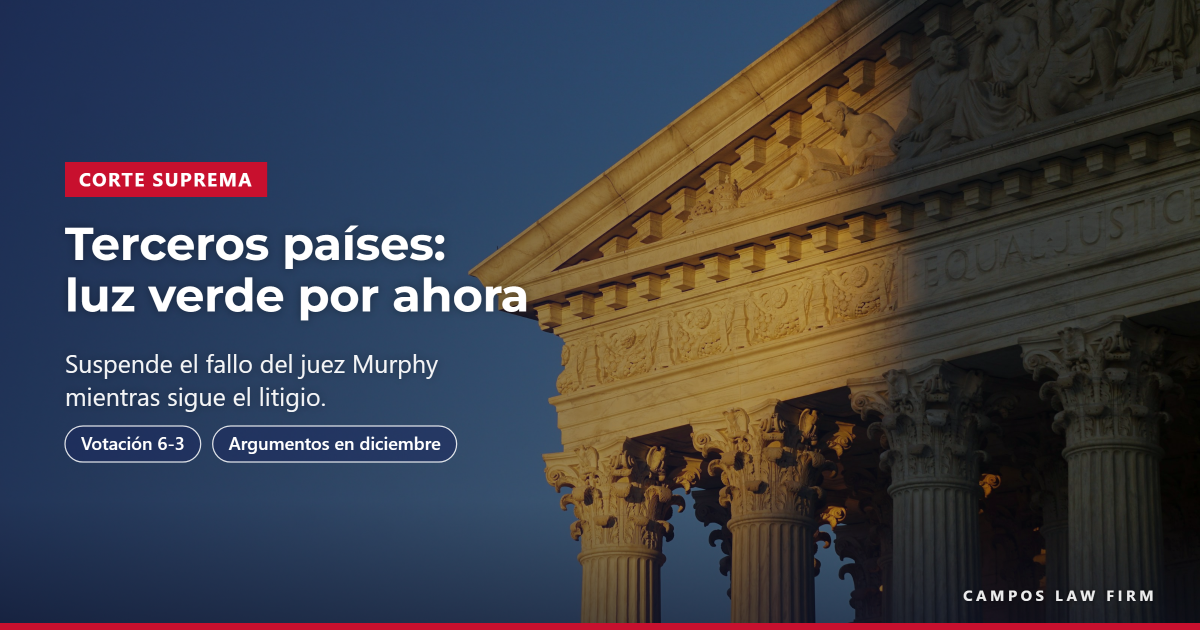
On September 29, the Supreme Court put that ruling on hold in a 6-3 vote and agreed to hear the case in December. That clears the way for flights to resume, and Burundi’s announcement adds to the list of possible destinations. We explain the ruling in our article on the Supreme Court letting third-country deportations resume.
Burundi joins other African nations that have already received U.S. deportees under this program, including Eswatini, South Sudan, Uganda, Rwanda, Liberia, Equatorial Guinea, and the Central African Republic. According to Reuters, more than 25,000 people have been sent to 29 countries since 2025, most of them to Mexico.
Could I Be Sent to Burundi if I Am Latin American?
The honest answer is that no one can rule it out completely, but the risk depends on your situation. These removals mainly target people with a final order of removal whose home country will not accept them, or whom the government decides to send elsewhere.
People who won protection from being returned to their own country, such as withholding of removal or protection under the Convention Against Torture, may also be exposed. Those protections apply to one specific country, not to every country.
If you have a pending asylum case, a green card application in process, or an open Immigration Court case without a final order, this announcement does not change your case on its own.
What Can You Do Now?
- Review your file: confirm whether you have a final removal order, its date, and whether it includes any protection.
- Raise fear early: if you are told you will be moved to a third country and you fear for your safety there, say so right away and ask to speak with your attorney.
- Keep key information handy: have your A-Number, copies of your documents, and your attorney’s contact details ready, and share them with your family.
- Do not sign what you do not understand: avoid signing departure papers you do not fully understand.
- Ask about legal options: in some cases, a motion to reopen or a request for a stay of removal may be available.
Protect Your Immigration Status with Campos Law Firm
Third-country announcements create fear, especially when the destination is distant and unfamiliar. The best response is knowing exactly where your case stands and what protections you have. Campos Law Firm is here to help you.
Do not leave your immigration status to chance. Call us today at +1 (844) 922-6767 to schedule a free, confidential consultation in English or Spanish. Campos Law Firm: Legal Solutions in All Areas of Law.

 English
  Spanish