
Leaving a detention center is an enormous relief. But it is not the end of the immigration case, and confusing the two can cost a family everything it just gained. That is the legal lesson of a case that became public in Texas on August 28, 2026.
At Campos Law Firm, we closely monitor developments in U.S. immigration policy to protect our clients’ rights and future. Below, we explain what happened, what protects detained children today, and what a family should do after a release.
What is happening?
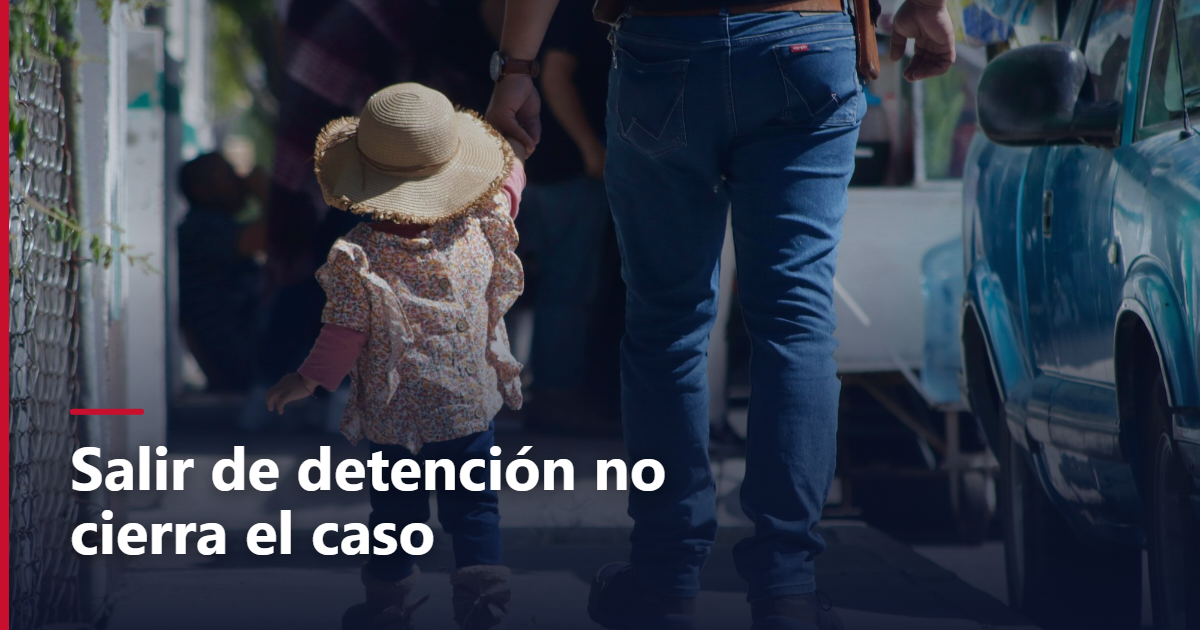
Katherine Bracho, 9, a student at a Northside ISD elementary school in San Antonio, and her father, Jesús Rafael Bracho, a Venezuelan mechanic, were released on Friday, August 28, 2026, from the South Texas Family Residential Center in Dilley, Texas, operated by CoreCivic.
As KSAT reported, the father was detained on July 1, 2026, after a Texas Department of Public Safety stop at his workplace, following which state authorities called Immigration and Customs Enforcement (ICE). ICE agents later returned to the family’s home and took the child as well. They spent nearly two months in custody.
Representative Joaquin Castro (D-San Antonio) had publicly called for their release on August 7 and visited the facility; the girl’s classmates sent letters. Castro announced the release on social media.
One point is genuinely in dispute, and it deserves an honest note: the Department of Homeland Security (DHS) told KSAT that the father had a final order of removal issued by an immigration judge on February 5, 2024. A relative told Noticias Telemundo he has had a pending asylum application since 2022. The two accounts are incompatible, and it has not been possible to verify which is correct.
What protects a detained child?
The framework is the Flores Settlement Agreement, a 1997 consent decree still in force, which sets three standards: children must be released without unnecessary delay to a parent, relative, or suitable custodian; conditions must be safe and sanitary; and facilities holding children must hold a state license for child care. From those requirements comes the practical 20-day limit in unlicensed facilities, as interpreted by federal judge Dolly Gee.
The agreement has been under pressure. The government asked to terminate it, citing changed circumstances, and on August 16, 2025, Judge Gee denied that motion; the case is on appeal before the Ninth Circuit. In July 2026, plaintiffs’ counsel called ICE’s compliance report a “fiction of compliance” and filed 105 pages of sworn declarations.
In mid-August 2026, Judge Gee ordered an extraordinary remedy: an independent monitor conducting unannounced inspections at Dilley for at least a year, paid for by the government. According to The Texas Tribune, roughly 3,000 children have been held there since the facility reopened in March 2025, more than half of them beyond the 20-day limit.
Does leaving detention mean the case is over?
No. This is the hardest distinction to grasp and the most damaging one to get wrong.
A release ends physical custody, not the immigration proceeding. What follows depends on where the person stands:
- Case still open before the Immigration Court, part of the Executive Office for Immigration Review (EOIR): hearings continue, first the master calendar, then the individual hearing. Missing a hearing can produce an in absentia order of removal.
- Final order of removal: release does not cancel it. An Order of Supervision (Form I-220B) is typically issued, and the government may re-detain and carry out the removal unless a stay is granted or the case is reopened.
- In both scenarios: conditions usually apply — periodic ICE check-ins, possible electronic monitoring (GPS ankle device or the SmartLINK app), travel restrictions, and the obligation to report any address change on Form AR-11 within 10 days.
It is also worth understanding what a congressional office can do. A member of Congress can file a formal inquiry with ICE, exercise oversight by visiting a facility, and generate public pressure. What they cannot do is order a release: that decision remains with ICE or a judge.
What should a family do after a release?
- Exact stage of the case: a pending asylum application and a final order are entirely different things. An attorney can check the A-number with EOIR and confirm it; do not rely on what you remember from a hearing.
- Every date written down: hearings, ICE check-ins, filing deadlines. Miss none of them.
- Release paperwork: keep Form I-220A or I-220B, the conditions of release, and any notices.
- Address changes: report them on Form AR-11 and make sure both the court and ICE have your correct address. Most in absentia orders begin with a notice that never arrived.
- Document what happened during detention: conditions, medical care, length of stay. It can matter both to the case and to Flores compliance.
- Legal representation quickly: if there is a final order, the deadlines for a motion to reopen or a stay are short and cannot be recovered.
Protect Your Family with Campos Law Firm
Family detention remains in active litigation and the rules may change. What does not change is that regained freedom has to be held onto: with hearings attended, deadlines met, and a clear strategy for the specific stage the case is in.
At Campos Law Firm we are a firm from immigrants, for immigrants, and we know what it means for a family to get a child back. If a relative of yours is detained or has just been released, do not leave their immigration status to chance. Call us today at +1 (844) 922-6767 to schedule a free, confidential consultation in English or Spanish. Campos Law Firm: Legal Solutions in All Areas of Law.