
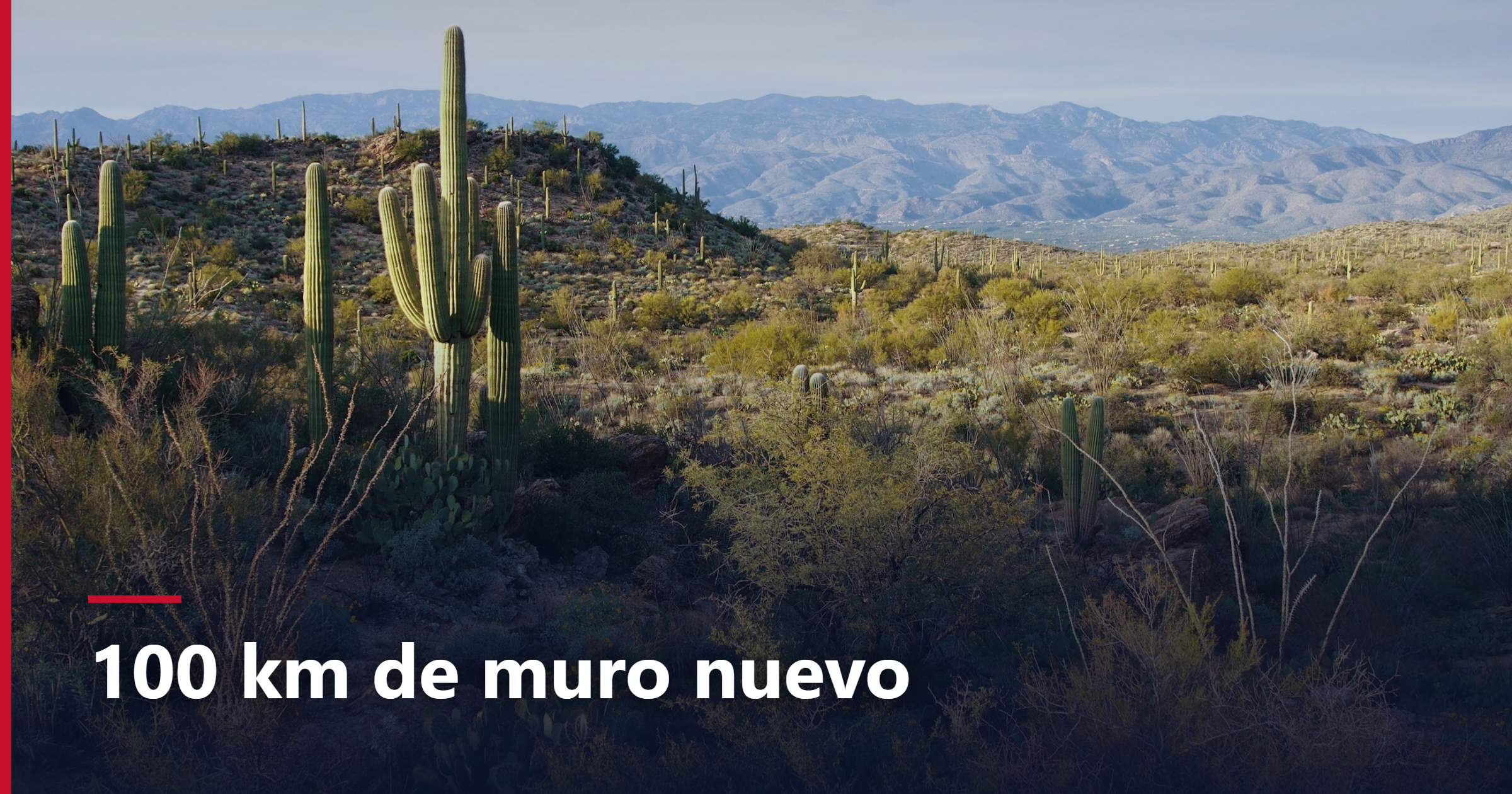
Sixty-two miles of new border wall in Arizona is big news. What does not change matters just as much as what does, and the two are worth separating before anyone makes a decision.
At Campos Law Firm, we closely monitor developments in U.S. immigration policy to protect our clients’ rights and future. Here is what is known, what is not, and what you can do.
What is happening on the Arizona border?
The news agency EFE reported on September 11, 2026 that construction began on the “Tucson 5” project, a roughly 62-mile (about 100-kilometer) stretch of wall along Arizona’s border with Mexico.
According to EFE, the planned structure is a double-layer steel and concrete barrier standing about 30 feet (9.1 meters) tall, paired with high-intensity lighting and new patrol roads. Customs and Border Protection (CBP) Commissioner Rodney Scott says the project is meant to close a corridor used for drug smuggling and irregular migration.
The Tohono O’odham Nation, whose reservation runs along that border stretch, opposes it. Tribal Chairman Verlon José has questioned the need for the wall, and the Nation argues the project infringes its sovereignty, threatens ceremonial sites and ancestral burial grounds — including Baboquivari Peak and Quitobaquito Springs — and disrupts travel by members who live on both sides of the line.
What did the judge rule, and what comes next?
The Nation sued in June 2026. The case is not being heard in Arizona but in federal district court in Washington, D.C., before Senior U.S. District Judge Richard Leon.
On August 14, 2026, Judge Leon denied the preliminary injunction the tribe sought to halt the work. His reasoning rested on the Roosevelt Reservation, a 60-foot federal strip along the border set aside in 1907, and on the principle that only Congress may diminish reservation boundaries. Leon also found that, at this stage, border security outweighed the harms the Nation alleged.
Two points that matter:
- The case is not over: the Nation appealed and asked to pause the work while the appeal is decided. The underlying dispute over reservation boundaries remains open.
- Environmental laws were waived: the Department of Homeland Security (DHS) invoked Section 102(c) of IIRIRA to waive dozens of statutes, including the National Environmental Policy Act and the Endangered Species Act. That is why the environmental argument carries less weight here than in other cases.
Does this change your right to seek asylum?
No. And this is the most common confusion with news like this.
A wall is infrastructure, not legislation. Building a barrier does not amend the Immigration and Nationality Act, the requirements for asylum, the deadlines, or the grounds of deportability. Anyone physically present in the United States may file for asylum regardless of how they entered, within the general one-year deadline from their last entry and subject to the exceptions the statute recognizes.
What does change are the facts on the ground: longer routes, more dangerous crossings, and a heavier agent presence in the area.
And here is a warning we always give plainly: crossing irregularly carries lasting legal consequences. Departing after accruing unlawful presence triggers the three- and ten-year bars; reentering after a prior deportation can be a federal crime and can reinstate the earlier order. These are scenarios to evaluate case by case, before moving — not after.
What to know if you live near or travel through the border region
- The “100-mile zone”: CBP operates checkpoints within that band from the border. Agents may ask about citizenship there; a brief inspection is lawful, while a full vehicle search normally requires probable cause or your consent.
- Carry your documents if you have them: permanent residents and people with valid permission are required to carry their immigration document. Never use false documents or claim to be a citizen if you are not — a false claim to U.S. citizenship creates permanent inadmissibility.
- You may stay silent about your status when you are not required to answer: you can calmly say you prefer not to answer questions without a lawyer.
- Write down what happens: time, place, agency, names and badge numbers. Those notes are the basis of any later complaint.
- Ask before traveling with a pending case: leaving the U.S. with a pending asylum application and no advance parole is presumed to be abandonment of the application.
Protect Your Immigration Status with Campos Law Firm
The Tucson 5 dispute adds a layer that rarely surfaces in border debates: the tribal sovereignty and territorial rights of an Indigenous nation whose families were split by a line they did not draw. It is a reminder that border decisions land on whole communities, not just on statistics.
While the litigation moves forward, what remains in your hands is understanding your own legal position before making an irreversible decision. At Campos Law Firm we review your case honestly, explain the real risks, and walk through the process with you. From immigrants, for immigrants.
Do not leave your immigration status to chance. Call us today at +1 (844) 922-6767 to schedule a free, confidential consultation in English or Spanish. Campos Law Firm: Legal Solutions in All Areas of Law.

 English
  Spanish