
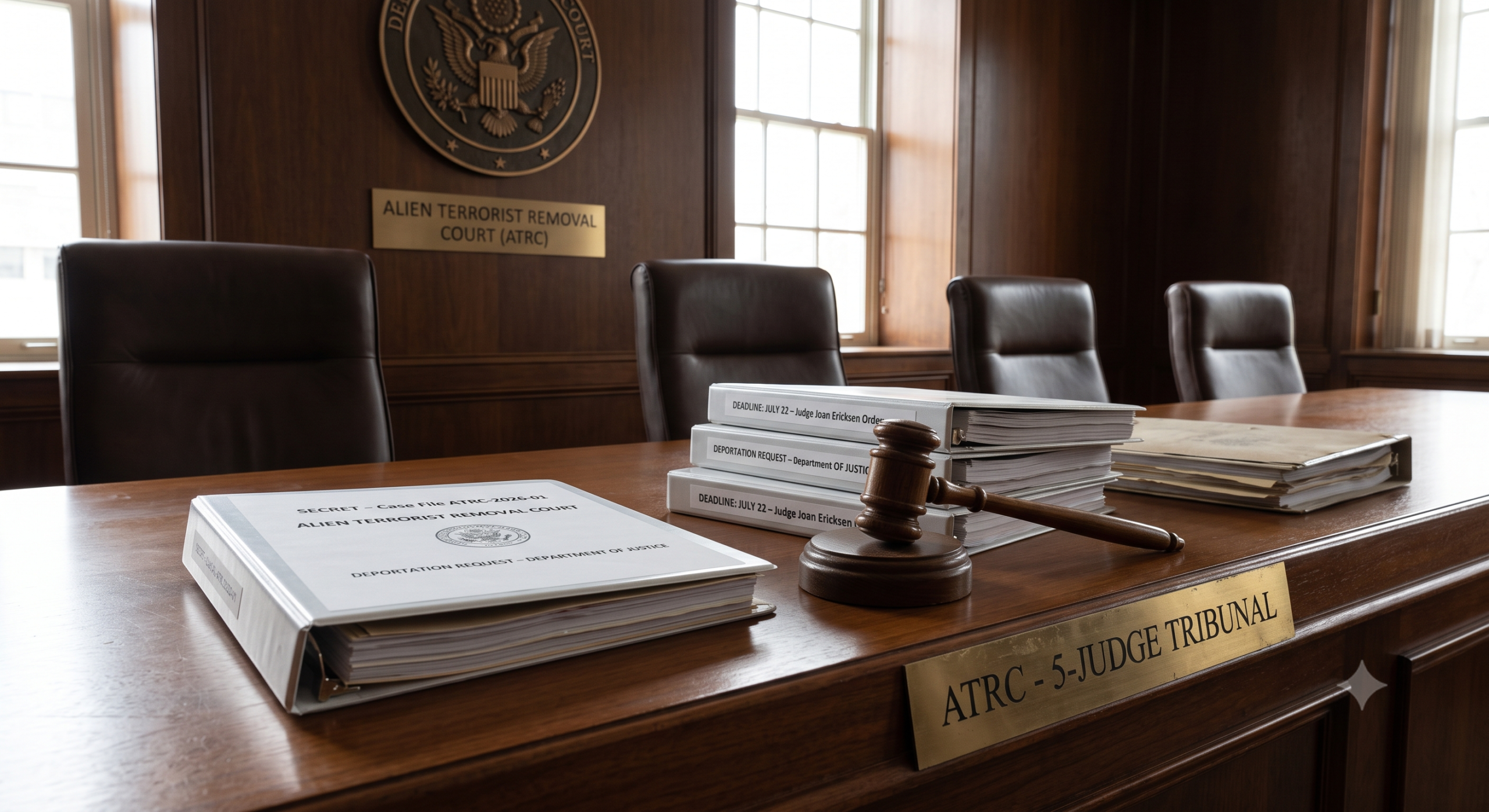
A court “asleep” for 30 years wakes up: what you need to know about the new deportation court

A court asleep for 30 years wakes up - what you need to know about the new deportation court
Image: AI
After remaining dormant for nearly 30 years, the Alien Terrorist Removal Court (ATRC) has been activated for the first time by the DOJ to deport an unnamed terrorism suspect, prompting scrutiny from the chief judge and signaling a new approach to expedited deportations.

In recent days, news has emerged that is generating a lot of talk in the immigration world. It involves the activation of a special court called the Alien Terrorist Removal Court (ATRC). Here we explain in a simple way what this is and why it is important for our community.

What is this court and why was it “asleep”? This court is not new; it was created in 1996, 30 years ago, but it had never been used. It is a 5-judge tribunal that exists for only one purpose: to decide whether to deport foreign individuals whom the government suspects of being terrorists.

Until now, the government used other avenues to deport people, but this week they decided to “wake up” this tribunal to hear a case for the first time in history.

What happened this week? The Department of Justice filed a request to remove a person from the United States using this court. The person’s name is secret and does not appear in public records.

For the government to use this court against someone, they must accuse them of serious things, such as: Participating in acts of terrorism, supporting or speaking in favor of terrorist groups, or belonging to organizations that promote violence.

Despite the government wanting to move quickly, the chief judge of this court, Joan Ericksen, has not given the green light yet. Last Thursday there was a meeting, and the judge said that the connection between what the suspect did and the terrorism laws the government wants to apply is unclear.

In fact, Judge Ericksen wrote that the government “might benefit from better thinking through its case” and gave them a deadline until this Wednesday, July 22, to provide more information and clear evidence.

Why does this matter now? Donald Trump’s administration has been looking for faster ways to carry out mass deportations. Previously, they tried to use very old war laws (from over 200 years ago) to expel groups of immigrants, but other judges said that was not correct and that, if they had suspicions of terrorism, they should use this special court, the ATRC.

Share the Post:

Related Posts

ICE under scrutiny: Its director resigns and changes in how its agents will operate are announced

ICE under scrutiny: Its director resigns and changes in how its agents will operate are announced

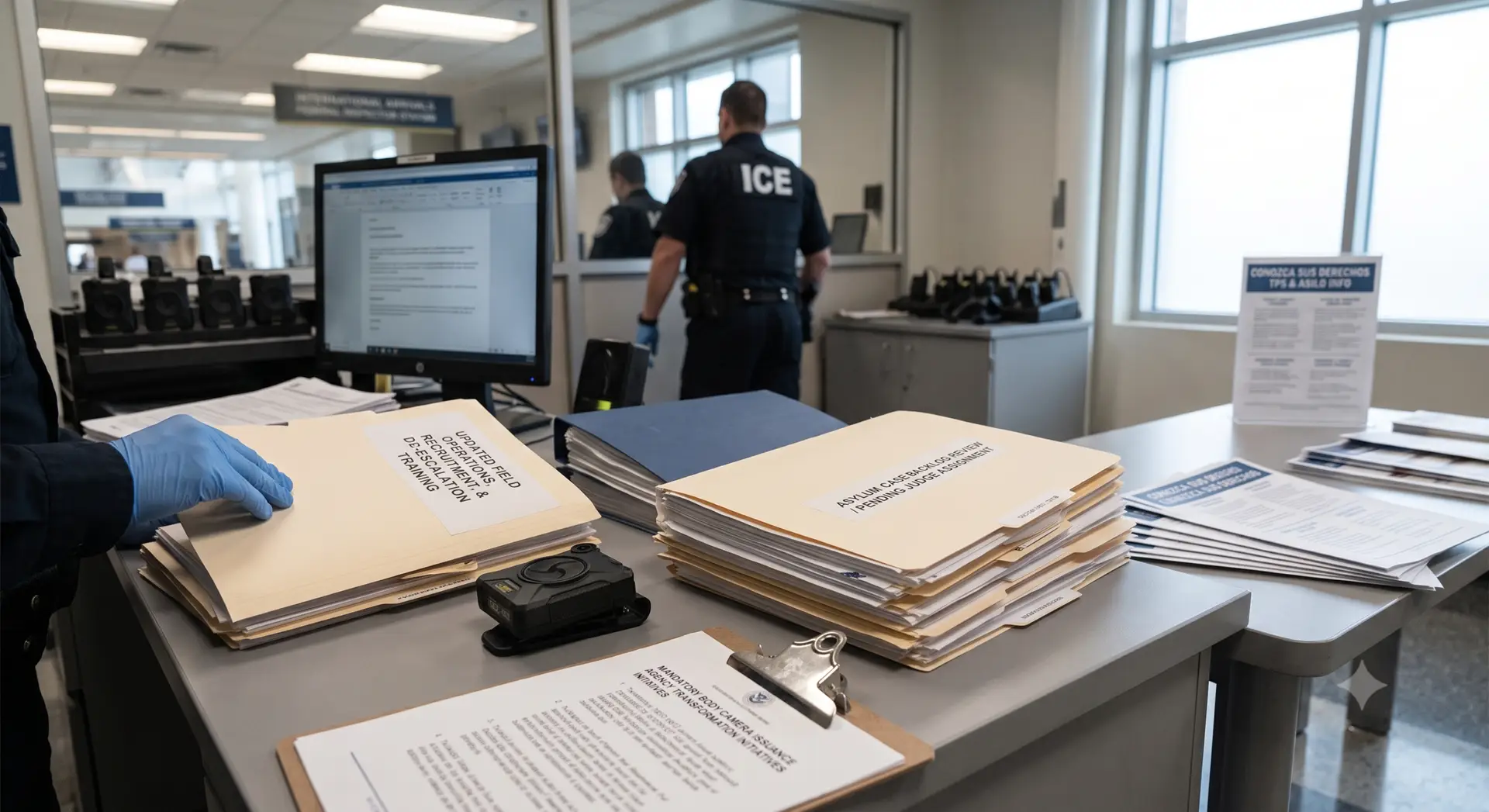
Immigration and Customs Enforcement (ICE) is undergoing significant transformations, highlighted by the resignation of Acting Director Todd Lyons amid heavy criticism over recent enforcement operations. In response to recent fatal shootings involving agents, leadership is pushing for mandatory body cameras and an overhaul of recruitment and training protocols to improve transparency. The agency is also shifting its operational tactics, including planning targeted detentions of Haitians as their Temporary Protected Status (TPS) ends, increasing visible detentions at commercial airports, and fast-tracking asylum cases directly to immigration judges to clear backlogs—a move experts warn could expedite deportations. Immigrants are advised to keep their documentation in order, attend all court hearings, and remain aware of their constitutional rights.

Read More
Judge orders release of key witness to fatal ICE shooting in Houston: What you need to know

Judge orders release of key witness to fatal ICE shooting in Houston: What you need to know

A Houston federal judge ordered the immediate release of José Trinidad Rojas Pliego, a key witness in the fatal shooting where an ICE agent killed Mexican contractor Lorenzo Salgado Araujo on July 7. The judge ruled that Rojas Pliego’s detention violated his constitutional right to due process. Rojas’ testimony is crucial, as it directly contradicts the government’s official self-defense narrative, labeling the claim that the driver attempted to run over the agents as a “lie.” In addition to his release, the judge ordered protections for the witness while the community and local prosecutors evaluate possible criminal charges against the federal agents involved.

Read More
en_USEN