
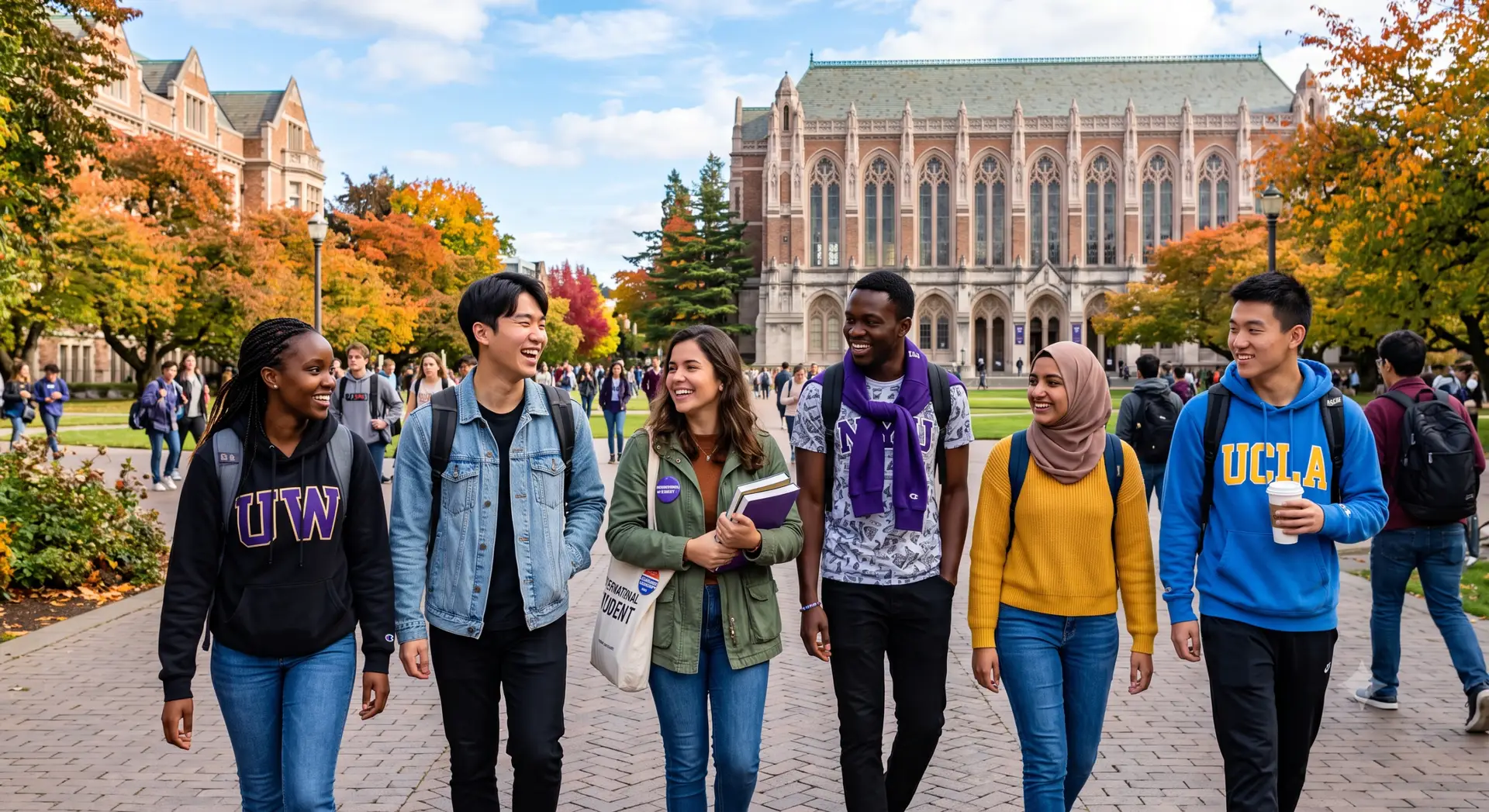
What you need to know about the new time limits and the reduced grace period
The Department of Homeland Security (DHS) has announced a historic change that completely transforms the rules for those holding student (F), exchange (J), and media (I) visas. This new final rule eliminates the benefit known as “duration of status” (D/S), which for decades allowed foreign nationals to remain in the country indefinitely as long as they maintained their studies or employment.
From now on, strict time limits will be implemented. For most students (F) and exchange visitors (J), the admission period will have a maximum cap of four years. On the other hand, media professionals (I visa) will see their stay reduced to a maximum of 240 days, with even more severe restrictions for Chinese journalists, who will have to renew their status every 90 days.
Goodbye to automatic approval from universities One of the most critical changes is that educational institutions will no longer have the final say if a student needs more time to graduate. Any extension must be formally requested before USCIS as an Extension of Stay (EOS). This process includes undergoing fingerprinting, background checks, and direct federal scrutiny to detect possible fraud.
Furthermore, the time to leave the country or change status after completing studies has been drastically reduced. The “grace period”, which used to be 60 days, will now be only 30 days. This forces graduates to plan their next immigration step much further in advance to avoid falling into an irregular status.
Impact for those already in the country It is crucial to understand that this measure does not only affect new applicants. Those already in the United States under the previous “duration of status” framework will be automatically transferred to the new system. Their stay will be limited to a maximum of four years counting from when the rule takes effect, which is expected by September 2026.
The government justifies these measures under national security arguments, claiming that the previous system allowed thousands of people to become “eternal students” to avoid leaving the country. However, educational leaders warn that this could deter international talent from choosing the United States as an academic destination.
What should you do? Planning is now mandatory. Do not leave your academic future to chance; a mistake in deadlines or in extension procedures before USCIS could cost you deportation. We recommend reviewing your case immediately to design a safe legal strategy that protects your stay before the new rules take effect.

 EN
EN  ES
ES  ZH
ZH  FR
FR